This is the self-learning module for MAPEH Arts 6, Quarter 1, Module 11: Creates Cartoon Character to Entertain, Express Opinions, Ideas, etc. It was developed by DepEd Region VI (Western Visayas) as an Alternative Delivery Mode module (First Edition, 2020) for Grade 6 learners studying at home or in class. After working through it, learners should understand why cartoons communicate so well and be able to create their own cartoon character to entertain, share an opinion, or promote an advocacy.
What learners will learn
According to the module, after going through it, learners are expected to:
- know how effective cartoons communicate ideas; and
- create cartoons to entertain, express opinions/ideas, and promote advocacy.
Lessons in this module
- Lesson 1: Cartoons Are Effective Communicators. Explains why cartoons get a message across quickly and what real skill a cartoonist needs.
- Lesson 2: Coming Up with Character Ideas. Gives eleven practical ways to come up with an original cartoon character.
- Lesson 3: Create Cartoons to Express Ideas/Opinions (titled “Creating Your Own Cartoon Character” inside the module). Covers basic drawing tools and three methods for designing, drawing, and digitally creating a character.
Why cartoons communicate so well
Lesson 1 teaches that cartoons are one of the most effective ways to communicate:
- A cartoon can deliver a message much faster than a written notice, often in seconds and without a long explanation.
- People often notice a cartoon on a sign before they read the written text.
- The government uses cartoons to make sure health and safety messages are heeded.
- Many industries use cartoons in advertising.
- Because we link cartoons with childhood, humor, and fun, they can relax an audience in a dull or tense meeting and lighten the mood in presentations.
The lesson also makes an important point: a good cartoonist is not simply someone who draws well. The real skill is the ability to boil an idea or joke down to a few short words and images.
How to come up with a character
Lesson 2 lists these ways to find ideas for your own cartoon character:
- Think about the characters you like and their traits.
- Identify your other interests, such as sports, hobbies, movies, and books.
- Free-write or free-draw for 15 to 30 minutes, jotting down every idea.
- Brainstorm with a creative friend.
- Play a word-association game: put random words (like candy, fax machine, purple, or powerful) in a hat and build a character from the word you draw.
- Model your character on friends and family.
- Be careful not to make the character resemble a loved one so closely that it embarrasses or hurts them.
- Pay attention to other people in your life.
- Sketch random people you see on the street.
- Model your character on yourself.
- Judge your ideas with a critical eye and mind.
The module also reminds learners: do not plagiarize.
Three methods for creating a cartoon character
Lesson 3 starts with offline tools (pencil, paper, eraser, sharpener, marker, and ruler), then presents three methods:
| Method | Main steps |
|---|---|
| Coming up with a design | Study other designs, list interests and traits, pick features to exaggerate, choose distinctive details, select colors that show personality, add accessories |
| Drawing the character | Keep a list of key details, sketch the shape in pencil, add details, fill in the face, add shading for depth, then color |
| Using design software | Choose a program, app, or website, scan or draw digitally, color, add effects, then upload and share |
How to use this module
Each lesson follows the usual parts: What I Know (pretest), What’s In, What’s New, What is It, What’s More, What I Have Learned, What I Can Do, Assessment, and Additional Activities. Answer all exercises on a separate sheet of paper or in your activity notebook, and do not write on the module.
The main outputs are artworks graded with rubrics printed in the module:
- Lesson 1: a cartoon or caricature about the importance of brushing teeth.
- Lesson 2: a sketch of your own original cartoon character.
- Lesson 3: a cartoon promoting the advocacy that vegetables are delicious and healthy, a political cartoon that shows justice, and a two-frame comic that entertains readers.
For learners: Take the pretest first, read each lesson in order, and check your answers honestly with the answer key at the end. For parents: Help your child gather simple materials like pencil, paper, eraser, and markers, and look over the artworks together. For teachers: The Notes to the Teacher ask you to provide example pictures, monitor the learner’s progress closely, and hold at least one interaction with the learner each week.
Frequently asked questions
What grade and quarter is this module for?
It is for Grade 6 MAPEH (Arts), Quarter 1, Module 11.
What lessons does the module cover?
It has three lessons: Cartoons Are Effective Communicators, Coming Up with Character Ideas, and Create Cartoons to Express Ideas/Opinions, which teaches how to design, draw, and digitally create a cartoon character.
Do I need to be good at drawing to make cartoons?
No. The module says a cartoonist’s key skill is not just drawing well but the ability to turn an idea or joke into a few short words and images.
Does the module have an answer key?
Yes. Answer keys for all three lessons are at the end. Many items say answers may vary, and the artworks are scored using the rubrics in the module.
What artworks will learners make?
Learners make a cartoon about brushing teeth, sketch an original character, create a vegetable advocacy cartoon, draw a political cartoon showing justice, and make a two-frame comic.
Full text of the module
The text below is a transcription of the PDF above, as printed.
MAPEH – Arts
Quarter 1 – Module 11: Creates Cartoon Character to Entertain, Express Opinions, Ideas, etc.
6
CO_Q1_Arts6_Module11
MAPEH – Arts
Alternative Delivery Mode
Quarter 1 – Module 11: Creates Cartoon Character to Entertain, Express Opinions, Ideas, etc.
First Edition, 2020
Republic Act 8293, section 176 states that: No copyright shall subsist in any work of the Government of the Philippines. However, prior approval of the government agency or office wherein the work is created shall be necessary for exploitation of such work for profit. Such agency or office may, among other things, impose as a condition the payment of royalties.
Borrowed materials (i.e., songs, stories, poems, pictures, photos, brand names, trademarks, etc.) included in this module are owned by their respective copyright holders. Every effort has been exerted to locate and seek permission to use these materials from their respective copyright owners. The publisher and authors do not represent nor claim ownership over them.
Published by the Department of Education Secretary: Leonor Magtolis Briones Undersecretary: Diosdado M. San Antonio
| Development Team of the Module | |
|---|---|
| Author: | Roselyn T. Navida |
| Editor: | Gerry D. Almanon |
| Reviewers: | Rebecca Y. Ibarreta, Mahnnie Q. Tolentino, Hajji S. Tropa |
| Illustrator: | Roselyn T. Navida |
| Layout Artist: | Roselyn T. Navida |
| Management Team: | Ramir B. Uytico, Pedro T. Escobarte Miguel Mac D. Aposin, Jerson B. Labos Elena P. Gonzaga, Donald T. Genine, Celestino S. Dalumpines IV Dobie Parohinog, Mahnnie Q. Tolentino Rebecca Y. Ibarreta, Hajji S. Tropa Ana Maria D. Arboleda, Annalyn N. Bebita Jeannen C. Borreros |
Printed in the Philippines by ________________________
Department of Education – Region VI – Western Visayas Office Address: Duran St., Iloilo City Telefax: (033) 336-2816, (033) 509-7653 E-mail Address: region6@deped.gov.ph
6
MAPEH – Arts
Quarter 1 – Module 11: Creates Cartoon Character to Entertain, Express Opinions, Ideas, etc.
Introductory Message
This Self-Learning Module (SLM) is prepared so that you, our dear learners, can continue your studies and learn while at home. Activities, questions, directions, exercises, and discussions are carefully stated for you to understand each lesson.
Each SLM is composed of different parts. Each part shall guide you step-by-step as you discover and understand the lesson prepared for you.
Pre-tests are provided to measure your prior knowledge on lessons in each SLM. This will tell you if you need to proceed on completing this module or if you need to ask your facilitator or your teacher’s assistance for better understanding of the lesson. At the end of each module, you need to answer the post-test to self-check your learning. Answer keys are provided for each activity and test. We trust that you will be honest in using these.
In addition to the material in the main text, Notes to the Teacher are also provided to our facilitators and parents for strategies and reminders on how they can best help you on your home-based learning.
Please use this module with care. Do not put unnecessary marks on any part of this SLM. Use a separate sheet of paper in answering the exercises and tests. And read the instructions carefully before performing each task.
If you have any questions in using this SLM or any difficulty in answering the tasks in this module, do not hesitate to consult your teacher or facilitator.
Thank you.
What I Need to Know
This module was designed and written with you in mind. It is here to help you master how to create cartoon character to entertain, express opinions, ideas, etc. The scope of this module permits it to be used in many different learning situations. The language used recognizes the diverse vocabulary level of pupils. The lessons are arranged to follow the standard sequence of the course. But the order in which you read them can be changed to correspond with the module you are now using.
The module aims that a learner creates cartoon character to entertain, express opinions, ideas, etc. and is divided into three lessons, namely:
- Lesson 1 – Cartoons Are Effective Communicators
- Lesson 2 – Coming Up with Character Ideas
- Lesson 3 – Create Cartoons to Express Ideas/Opinions
After going through this module, you are expected to:
- know how effective cartoons communicate ideas; and
- create cartoons to entertain, express opinions/ideas, and promote advocacy.
What I Know
Write a check (✓) if it refers to the effectivity of cartoons and X if it is not. Write your answer on a separate sheet of paper.
_____ 1. Cartoons entertains.
_____ 2. It conveys important messages.
_____ 3. With cartoons, you will have a dull moment.
_____ 4. Cartoons are inefficient communicators.
_____ 5. Many government agencies use cartoons for their advocacies.
_____ 6. Animated cartoons are very entertaining.
_____ 7. More often, it is difficult to understand cartoons.
_____ 8. Books use cartoons as illustrations.
_____ 9. Cartoonists need not to be good in drawing.
_____ 10. Cartoons is sometimes a form of joke.
CO_Q1_Arts6_Module11
Lesson 1: Cartoons Are Effective Communicators
In this lesson, it is nice to know the purpose of creating cartoons. Such are effective communicators for most learners today grow up with cartoons shown on television.
What’s In
Arrange the following steps in Creating a Cartoon Character using PowerPoint Software. Use numbers 1-5. Write your answer on a separate sheet of paper.
______ Use callouts for dialogue.
______ Start out small by using a smiley face, then work your way up to a stick figure.
______ Open Microsoft PowerPoint
______ Use these steps to make one decent cartoon.
______ Think of the cartoon you want to make.
______ To make it seem like your character is entering the room, open up the task pane. (this should be under the view tab) and go to the custom Animation tab.
Notes to the Teacher
The teacher will provide pictures as examples so that the learner can easily understand what is being discussed in this module. He/she should also monitor closely the progress of the child. It is strongly advised that there will be once a week interaction with the teacher and learner.
CO_Q1_Arts6_Module11
What’s New
[illustration: smiling yellow face with big eyes giving a thumbs up]
✓ What does this image tells?
✓ Do you like the color?
✓ Do the cartoonist convey the message clearly?
What is It
Cartoons are Such Effective Communicators
Cartoons are one of the most effective means of communication. It can convey a message far more quickly than a written notice. Example:
Government certainly understands the importance of cartoons, and it can be the ideal way to make sure health and safety messages are heeded.
A cartoon will often be picked up on before the written content of a sign too. This message is conveyed in seconds and without the need for a lengthy explanation.
Cartoons can be used powerfully in advertising across many industries too.
Cartoons also have our childhood associations with humor, happiness and fun and can serve to relax an audience in a potentially dull or tense meeting. This can also be used as motivational tools in presentations during speaking engagement. It can lighten the atmosphere.
The Skill of the Cartoonist
The skill of the effective cartoonist is not simply the ability to draw well. It is the ability to distill an idea, or joke, into an few short words and images. It’s this communication short-cutting that makes the cartoon carry the message so effectively.
CO_Q1_Arts6_Module11
What’s More
Think of the importance of brushing teeth. Make an illustration, a caricature or a cartoon about it. You will be graded by this rubric below.
| Category | Very Good Artist | Developing Artist | Beginning Artist |
|---|---|---|---|
| 8 – 10 | 5 -7 | 0 – 4 | |
| Material Application & Techniques | Demonstrates qualities & characteristics of various media techniques & processes. | Demonstrates some qualities & characteristics of various media techniques & processes. | Lacks demonstration of qualities & characteristics of various media techniques & processes. |
| 8 – 10 | 5 -7 | 0 – 4 | |
| Understanding of Content | Insight and depth of content understanding are evident. | Some depth of content understanding is evident. | Lacks content understanding and is clearly a work in progress. |
| 8 – 10 | 5 -7 | 0 – 4 | |
| Completion | Most of the steps are completed to the best of student ability. | Some of the steps are completed but needs finishing touches. | Artwork appears to be a work in progress. |
| 8 – 10 | 5 -7 | 0 – 4 | |
| Tool/ Material Responsibility | Demonstrates respectful use of tools and materials. | Demonstrates some respect for art tools and materials. | Demonstrates little or no respect for the art tools and materials. |
| 8 – 10 | 5 -7 | 0 – 4 | |
| Craftsmanship | Artwork reflects deliberate control having good craftsmanship. | Artwork reflects adequate control and having some craftsmanship. | Artwork appears to be a work in progress with little or no control of craftsmanship. |
| 8 – 10 | 5 -7 | 0 – 4 | |
| Creative process | Expresses original idea and insightful perspectives with an appropriate amount of details. | Expresses original ideas but has few details. | Lacks original idea and has few details. |
A Handy Rubric for Art Teachers – Educational Technology. https://i.pinimg.com/originals/e4/78/19/e47819bef0f9692588ca6546f5612867.jpg

CO_Q1_Arts6_Module11
What I Have Learned
Cartoons are one of the most effective means of communication we have. Even the government recognizes the importance of it in conveying messages. It can also be used powerfully in advertising across many industries.
Cartoons also have our childhood associations with humor, happiness and fun and can serve to relax an audience in a potentially dull or tense meeting.
In creating cartoons, the skill of the effective cartoonist is not simply the ability to draw well. It is the ability to distill an idea, or joke, into a few short words and images.
What I Can Do
[illustration: cartoon figure with a thought cloud, a plus sign, and angled limbs inside a black-bordered box]
Illustration by Roselyn T. Navida
✓ What is the meaning of this image?
Assessment
[illustration: two cartoon figures facing each other, each with a blue speech bubble]
✓ What can you say about this image? ✓ Write at least 3 comments.
Additional Activities
[illustration: a frowning cartoon figure with two question marks above its head, surrounded by the numbers 12 and 20 and the symbols +, ×, −, =, ÷, and ≠]
Make at least 5 comments on this picture. Write it in your activity notebook.
Note: All illustrations on this page were created by Roselyn T. Navida
What I Know
List down at least ten ideas on how to create your own cartoon character.
Lesson 2: Coming Up With Character Ideas
In this lesson, it is nice to learn the skill on how to conceive a cartoon character for yourself. Some cartoon character animators created a cartoon as a reflection of themselves.
What’s In
Draw a ☺ if the statement is true and ☹ if it is not correct.
_____ 1. Animated cartoons are very entertaining. _____ 2. More often, it is difficult to understand cartoons. _____ 3. Books use cartoons as illustrations. _____ 4. Cartoonists need not to be good in drawing. _____ 5. Cartoons is sometimes a form of joke.
Notes to the Teacher
The teacher will provide pictures as examples so that the learner can easily understand what is being discussed in this module. He/she should also monitor closely the progress of the child. It is strongly advised that there will be once a week interaction with the teacher and learner.
What’s New
Look at this character below.
[illustration: woman cartoon character with shoulder-length dark hair and glasses, wearing a black dress, standing in front of a wooden floor against a peach background]
Illustration by Roselyn T. Navida on Avatoon App
✓ What characteristic does this character have? ✓ Does it capture one’s attention? How?
What is It
Coming Up with Character Ideas
- Think about the characters you like
A good way to come up with your own idea for a new character is to begin by identifying the one’s you like and thinking about their characteristics.
- Identify your other interests
What are your favorite sports and hobbies? What kind of movies, books, and stories do you like best? Finding the answers to this questions could point you in a fruitful direction.
- Free-write
If you’d like to come up with an awesome cartoon character but have no real solid ideas, begin by free-writing or free-drawing for a short period of time. Allow yourself 15 – 30 minutes to jot down any and every idea you have.
- Brainstorm with a friend
If your well of ideas is currently dry, you may benefit from brainstorming with a creative friend who is also interested in comic characters.
- Play a word-association game
Place a series of random words in a hat. For example, you could choose nouns like candy, lollipop, or fax machine or you could include adjectives like purple, powerful or innocent. Create a character based on that word.
- Model your character on your friends and family
Many of the best characters are based on real people and you could already be in close contact with next great character. You can create a cartoon character best from their own persona.
- Be careful about how closely you make your character resemble your loved one
You don’t want to cause embarrassment, offense, or hurt feelings if that person sees your character and thinks you are making fun of them.
- Pay attention to the other people in your life
- Sketch the random people you see on the street
- Model your character on you
- Judge your ideas with a critical eye and mind
What’s More
I hope you have now an idea on how to create your own cartoon character. Why not try to sketch out what’s in your mind? Remember, don’t plagiarize.
What I Have Learned
Coming up with Character Ideas
✓ Think about the characters you like. ✓ Identify your other interests. ✓ Free-write ✓ Brainstorm with a friend. ✓ Play a word-association game ✓ Model your character on your friends and family.
✓ Be careful about how closely you make your character resemble your loved one. ✓ Pay attention to the other people in your life. ✓ Sketch the random people you see on the street. ✓ Model your character on you. ✓ Judge your ideas with a critical eye and mind.
What I Can Do
Study the suggested steps on coming up with character ideas and start working on your own cartoon character.
Assessment
Write at least 5 things that you should remember or consider in making your own cartoon character?
Additional Activities
Make some clippings of your favorite cartoon characters. Do it in your activity notebook.
What I Know
Write a check (✓) if the tool listed is an offline and an (X) if not. Write your answer on a separate sheet of paper.
_________ 1. Pencil _________ 2. WordArt _________ 3. Paper _________ 4. Sharpener _________ 5. Textbox _________ 6. Shape fill _________ 7. Eraser _________ 8. Marker _________ 9. Slide _________ 10. Rulers
Lesson 3: Creating Your Own Cartoon Character
A learner need not to be very good in drawing but the skill on how to entertain others thru cartoons.
What’s In
Write at least 5 common ideas in coming up a cartoon character.
Notes to the Teacher
The teacher will provide pictures as examples so that the learner can easily understand what is being discussed in this module. He/she should also monitor closely the progress of the child. It is strongly advised that there will be once a week interaction with the teacher and learner.
What’s New
Match column A with column B. Write the letter of the correct answer on a separate sheet of paper.
| Column A | Column B |
|---|---|
| 1. Used to erase mistakes in drawing | A. Sharpener |
| 2. Used to sharpen pencils or crayons | B. Marker |
| 3. Used to straighten the lines of drawing | C. Pencil |
| 4. Used for drawing objects as visible as possible | D. Paper |
| 5. Used for sketching/drawing | E. Rulers |
What is It
After discussing the preliminaries in cartoon character making, by using the offline tools, here’s the next step.
How to Create Your Own Cartoon Character
Co authored by: wikiHow Staff. Updated January 4, 2020 https://www.wikihow.com/Create-Your-Own-Cartoon-Character
Method 1: Coming Up with a Design
- Study other character designs for inspirations.
- Write a list of interests and character traits you want to include.
- Make a list of features that you can exaggerate for your character.
- Choose distinctive details for your character to make it unique.
- Select colors that communicate the character’s personality.
- Add accessories to your character to emphasize their traits.
Method 2: Drawing A Cartoon Character
- Keep a list of key details you want to include.
- Sketch out the shape of the characters on paper with a pencil.
- Add details to the sketch to start to flesh it out.
- Fill in the face of the sketch.
- Add shading to the lines to add depth to the character.
- Color the sketch and add shading to bring it to life.
Method 3: Using Design Software to Create A Character
- Choose a program, app or website to create your character.
- Sketch your character on paper and scan it or draw it digitally.
- Color your character digitally using the program.
- Add effects to your digital cartoon character using your design software.
- Upload your cartoon character to share it with the world.
What’s More
Create a simple cartoon character that shows advocacy like vegetables are delicious and good to our health. Your work will be rated by a rubric below.
| Score | Points | 4 | 3 | 2 | 1 |
|---|---|---|---|---|---|
| Content vs Accuracy | The pupils understand well the topic | The pupils understanding is evident | Understanding is somewhat evident | Understanding is not clear | |
| Content vs Relevance | The message is clear enough and relevant | The message is clear and relative | The message is not clear | No message can be perceived | |
| Illustrations/Graphics | Illustrations were creatively designed | Illustrations were somewhat creative | Illustrations were a little bit creative | No creativity in the output | |
| Attractiveness | The output is neat, in order and pleasing to the eye. | The output is good | The output is not organized | The output is messy and not complete. |
What I Have Learned
How to Create Your Own Cartoon Character
There were three methods on how to create your own cartoon character:
First is Coming Up with a Design where you are going to think of a cartoon character that you want to portray. Think of the characteristics, the colors that suits the character and some accessories to accentuate their personalities.
Second is drawing your cartoon character. Sketching the cartoon character is done here. Start with the whole face – hair, eyes, nose, mouth that suits the expression that you want to have for your character. Shading is also important.
Third is using design software to create a character. There was many software available to replenish your work. You can have a finished sketch, scan and you can apply needed finishing touches. You can also sketch using some apps or software in your computer. Then, share your artwork to the world to showcase your talent.
What I Can Do
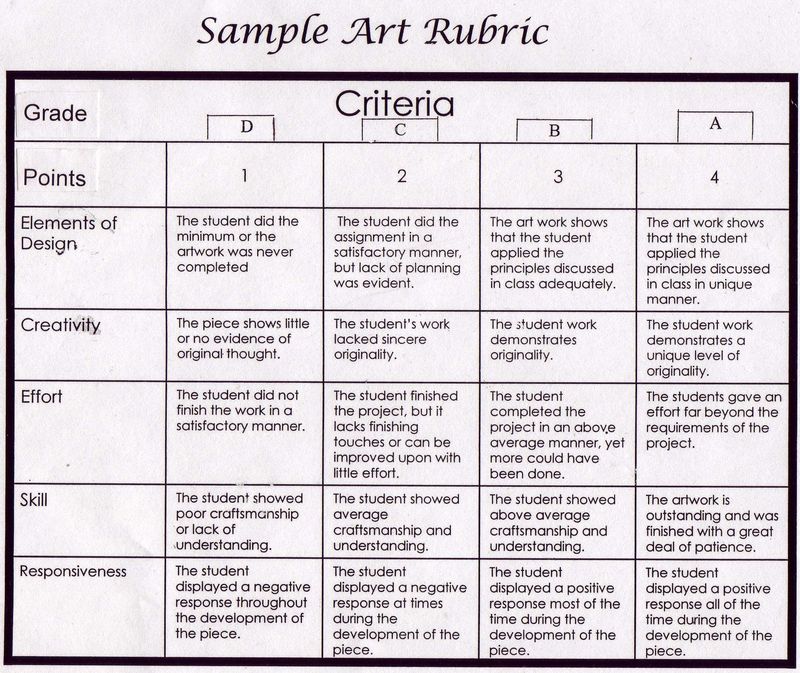
Create a political cartoon that shows justice. A rubric will be the basis for your score.
| Points | 1 | 2 | 3 | 4 |
|---|---|---|---|---|
| Elements of Design | The student did the minimum or the artwork was never completed | The student did the assignment in a satisfactory manner, but lack of planning was evident. | The artwork shows that the student applied the principles discussed in class adequately. | The artwork shows that the student applied the principles discussed in class in unique manner. |
| Creativity | The piece shows little or no evidence of original thought. | The student’s work lacked sincere originality. | The student work demonstrates originality. | The student work demonstrates a unique level of originality. |
| Effort | The student did not finish the work in a satisfactory manner. | The student finished the project, but it lacks finishing touches or can be improved upon with little effort. | The student completed the project in an above average manner, yet more could have been done. | The students gave an effort far beyond the requirements of the project. |
| Skill | The student showed poor craftsmanship or lack of understanding. | The student showed average craftsmanship and understanding. | The student showed above average craftsmanship and understanding. | The artwork is outstanding and was finished with a great deal of patience. |
| Responsiveness | The student displayed a negative response throughout the development of the piece. | The student displayed a negative response at times during the development of the piece. | The student displayed a positive response most of the time during the development of the piece. | The student displayed a positive response all of the time during the development of the piece. |
Houston Academy-Art/Assessment/Pinterest/. https://www.pinterest.ph/pin/171699804516114541/
Assessment
Make a two – frame comic cartoon that entertain readers. The rubric below will rate your work.
| Points | 1 | 2 | 3 | 4 |
|---|---|---|---|---|
| Elements of Design | The student did the minimum or the artwork was never completed | The student did the assignment in a satisfactory manner, but lack of planning was evident. | The artwork shows that the student applied the principles discussed in class adequately. | The artwork shows that the student applied the principles discussed in class in unique manner. |
| Creativity | The piece shows little or no evidence of original thought. | The student’s work lacked sincere originality. | The student work demonstrates originality. | The student work demonstrates a unique level of originality. |
| Effort | The student did not finish the work in a satisfactory manner. | The student finished the project, but it lacks finishing touches or can be improved upon with little effort. | The student completed the project in an above average manner, yet more could have been done. | The students gave an effort far beyond the requirements of the project. |
| Skill | The student showed poor craftsmanship or lack of understanding. | The student showed average craftsmanship and understanding. | The student showed above average craftsmanship and understanding. | The artwork is outstanding and was finished with a great deal of patience. |
| Responsiveness | The student displayed a negative response throughout the development of the piece. | The student displayed a negative response at times during the development of the piece. | The student displayed a positive response most of the time during the development of the piece. | The student displayed a positive response all of the time during the development of the piece. |
Houston Academy-Art/Assessment/Pinterest/. https://www.pinterest.ph/pin/171699804516114541/
Additional Activities
Practice making your own cartoon character.
Answer Key: Lesson 1
[transcriber’s note: this page is printed upside down; the content below is transcribed in its upright reading order]
What I Know
- ✓
- ✓
- x
- x
- ✓
- ✓
- x
- ✓
- ✓
- ✓
What’s In
- 5
- 3
- 1
- 6
- 2
- 4
What’s More
Answers vary
Assessment
Answers vary
Answer Key: Lesson 2
[transcriber’s note: this page is printed upside down; the content below is transcribed in its upright reading order. The faces in the What’s In answers are small and hard to tell apart; the symbols are given as best read]
What I Know
Answers may vary
What’s In
- ☺
- ☹ [?]
- ☹ [?]
- ☺ [?]
- ☹ [?]
What’s More
Answers may vary
What I Can Do
Answers may vary
Assessment
Answers may vary
Answer Key: Lesson 3
[transcriber’s note: this page is printed upside down; the content below is transcribed in its upright reading order]
What I Know
- ✓
- x
- ✓
- ✓
- x
- x
- ✓
- ✓
- x
- ✓
What’s In
Answers may vary
What’s More
c/o rubrics
What I Can Do
c/o rubrics
Assessment
c/o rubrics
References
Retrieved from:
http://www.pixabay.com. Popular images-logos
http://2.bp.blogspot.com/-D3spQgmNNfU/Ve5IerBAk4I/AAAAAAAAAA4/o9u6EWhFd6k/s1600/ArtRubric.jpg
http://www.cartoonmotivators.com/blog/why-cartoons-are-such-effective-communicators/
For inquiries or feedback, please write or call:
Department of Education – Bureau of Learning Resources (DepEd-BLR)
Ground Floor, Bonifacio Bldg., DepEd Complex
Meralco Avenue, Pasig City, Philippines 1600
Telefax: (632) 8634-1072; 8634-1054; 8631-4985
Email Address: blr.lrqad@deped.gov.ph * blr.lrpd@deped.gov.ph
Leave a Reply