This is the Senior High School self-learning module for Contemporary Philippine Arts from the Regions, Quarter 1, Module 1: Arts in the Philippines (Alternative Delivery Mode, First Edition, 2020). It has one lesson that gives a short overview of how Philippine art developed, from the Ethnic Tradition to contemporary art, and introduces the elements and principles of art. After the module, learners should be able to define contemporary arts and describe art forms from the regions.
What learners will learn
After going through this module, learners are expected to:
- define contemporary arts;
- describe the art forms from the various regions through the development of Philippine arts; and
- describe various contemporary art forms from the regions based on the elements and principles of arts.
The module contains one lesson, Lesson 1: Arts in the Philippines. It defines art, or “Sining,” as the different ways of expressing human skills and imagination in creating aesthetic conditions, objects, and presentations. Art is not limited to what we see; we use all our senses to appreciate it.
The three traditions of Philippine art
The module explains that Philippine art developed through three major traditions. Each one shaped art in a different way.
| Tradition | What influenced art | Examples in the module |
|---|---|---|
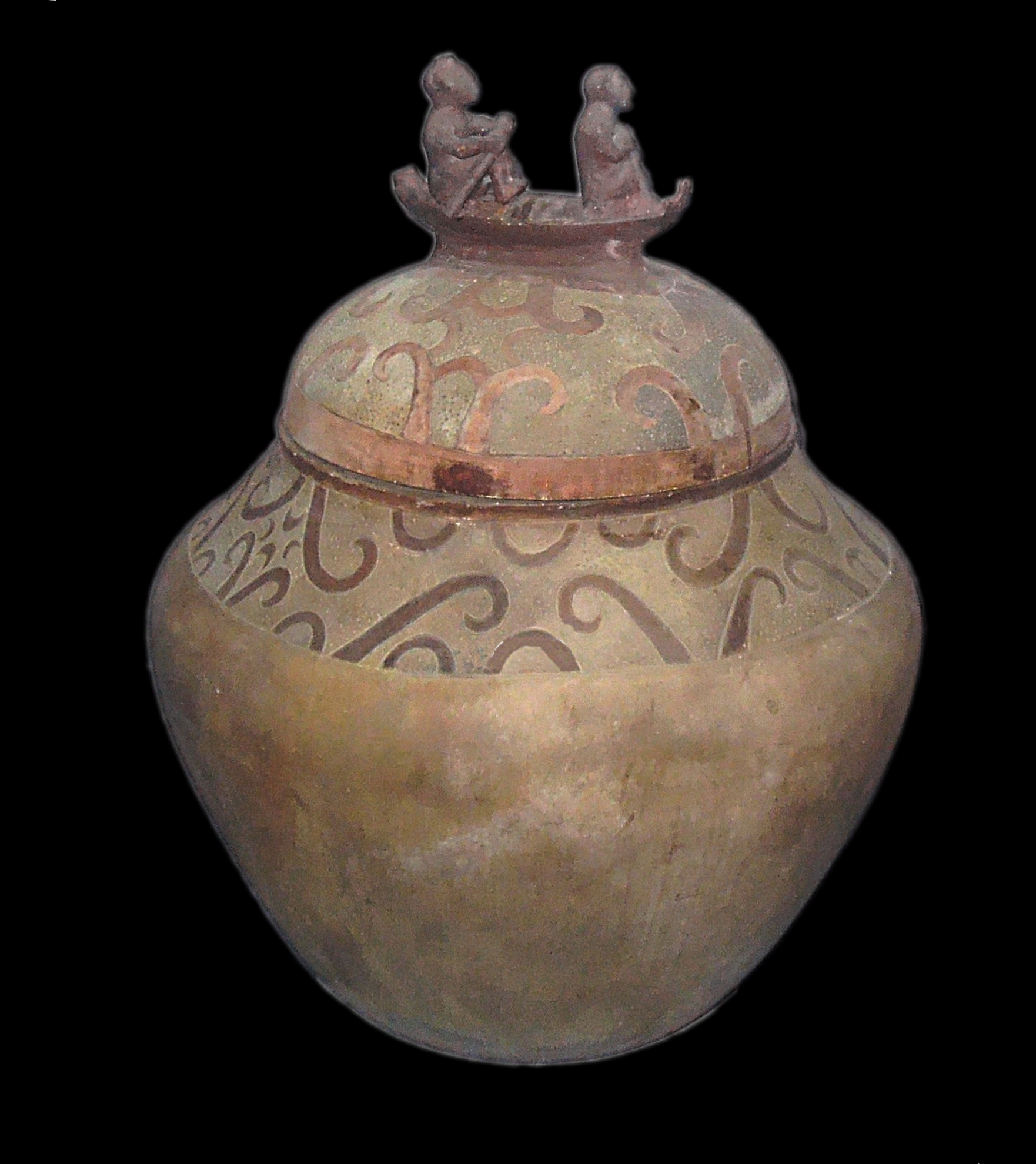
| Ethnic Tradition | Geographic location and the experiences of Filipinos; art reflected pagan beliefs, daily work such as fishing and farming, and community patterns | Angono Petroglyphs (127 human and animal figures carved on a rock wall), Manunggul Jar (a burial jar from Palawan showing belief in life after death), Banga or pot dance of the Kalinga |
| Spanish Colonial Tradition | Religion and secularization; the Spaniards used art to spread the Catholic faith | “Langit, Lupa, at Impyerno” (heaven, earth, and hell), a wall painting by Josef Luciano Dans in Paete, Laguna; St. Paul Metropolitan Cathedral in Vigan, a Baroque church |
| American Colonial and Contemporary Arts Traditions | Education and governance, then urbanization, consumerism, political change, and new technology | Modern art: “The Making of the Philippine Flag” by Fernando Amorsolo, “Bayanihan” by Carlos “Botong” Francisco. Contemporary art: “Cinco Marias (Tres Marias Series)” by Federico Aguilar Alcuaz, an art installation in the Sand Dunes of Paoay by Leeroy New |
Two terms in the last tradition are easy to mix up:
- Modern art is the practice of art from the 1860s to the 1960s. Its main theme is national identity.
- Contemporary art is the practice of art from the 1970s to the present. It mirrors contemporary culture and society, and diverse, emerging art practices appear in this period.
Elements and principles of art
The module says that knowing the elements and principles of art helps both the artist and the viewer understand an artwork more deeply.
Elements of art
- Space: emptiness in an artwork, either positive space (the part enclosed in a shape) or negative space (the part around it).
- Line: a series of connected points. Horizontal lines suggest calm, vertical lines suggest strength, and diagonal lines suggest action.
- Shape and form: shapes are two-dimensional (height and width), such as geometric, organic, and abstract shapes. Forms are three-dimensional (height, width, and volume), such as a cone, sphere, or cylinder.
- Color: hues produced when light passes through a prism; colors may suggest lightness, darkness, coolness, or warmth.
- Value: the lightness or darkness of a color.
- Texture: how the surface of an artwork feels or looks like it feels, such as rough, smooth, bumpy, or slippery.
Principles of art
- Proportion: the relationship of sizes, for example a person drawn in the right size next to a house.
- Harmony: the unity of the artwork through the arrangement of related elements.
- Variety: adding different elements to break monotony.
- Movement: the illusion of motion in an artwork.
- Rhythm: repeating elements to create a pattern that guides the eye.
- Balance: the even and equal distribution of elements.
- Emphasis: giving greater impact to a certain element.
Activities and assessment
- What I Know: a 15-item multiple-choice pretest.
- What’s In: a graphic organizer where learners write five words related to Philippine arts and explain them in three sentences, scored with a rubric.
- What’s New: learners look at the Manunggul Jar, “The Making of the Philippine Flag,” and “Cinco Marias” and answer guide questions.
- What’s More, Activity 1: identifying the tradition (ET, ST, or ACT), matching elements and principles, and analyzing “Angry Christ” by Alfonso Ossorio.
- What I Can Do, Activity 2 (My Own Artwork): a drawing that shows four contemporary Filipino cultures and uses three elements and two principles of art, scored for originality, effort and rigor, and cultural relevance.
- Assessment: three essay questions on movement, harmony, and appreciating the “Bayanihan” mural.
- Additional Activities: a simple symbolic drawing about Philippine contemporary arts shared privately on social media.
How to use this module
For learners: Answer What I Know first. If you get all items right, the module says you may skip it. Then work through each part in order, finishing one task before the next. Write all answers on separate sheets, not on the module. Prepare pens, pencils, an eraser, coloring materials, and bond paper. You can check your answers to the pretest and Activity 1 with the Answer Key at the end. For Activity 2, take a photo of your drawing and send it to your teacher through the channel and deadline your teacher sets, with your full name and section.
For parents: Help your child prepare the drawing and coloring materials ahead of time, and remind them to use separate sheets for the pretest, exercises, and assessment.
For teachers: The module asks facilitators to orient learners on how to use it, track their progress, and encourage them as they work. Several tasks are open-ended and graded with the rubrics printed in the module, so the answer key lists them as “answers may vary.”
Frequently asked questions
What grade level is this Contemporary Philippine Arts from the Regions module for?
It is a Senior High School module for Quarter 1. The module itself does not name a specific grade, so it may be used by Senior High School learners taking the subject.
What are the three traditions of Philippine art in this module?
The Ethnic Tradition, the Spanish Colonial Tradition, and the American Colonial and Contemporary Arts Traditions. Each was shaped by different influences, such as geography, religion, and education and governance.
What is the difference between modern art and contemporary art?
According to the module, modern art is the practice of art from the 1860s to the 1960s, with national identity as its main theme. Contemporary art is the practice of art from the 1970s to the present and mirrors today’s culture and society.
Does the module have an answer key?
Yes. The Answer Key gives the answers to the 15-item pretest and parts A and B of Activity 1. Open-ended tasks such as the artwork analysis and the assessment are marked as answers may vary and are scored with rubrics.
What are the elements and principles of art?
The elements are space, line, shape, form, color, value, and texture. The principles are proportion, harmony, variety, movement, rhythm, balance, and emphasis.
Full text of the module
The text below is a transcription of the PDF above, as printed.
Contemporary Philippine Arts from the Regions Quarter 1 – Module 1: Arts in the Philippines
Senior High School
Contemporary Philippine Arts from the Regions
Quarter 1 – Module 1
Arts in the Philippines
[logo: DepEd, Department of Education]
[logo: ADM, Alternative Delivery Mode]
[stamp: GOVERNMENT PROPERTY NOT FOR SALE]
Contemporary Philippine Arts from the Regions Alternative Delivery Mode Quarter 1 – Module 1: Arts in the Philippines First Edition, 2020
Republic Act 8293, section 176 states that: No copyright shall subsist in any work of the Government of the Philippines. However, prior approval of the government agency or office wherein the work is created shall be necessary for exploitation of such work for profit. Such agency or office may, among other things, impose as a condition the payment of royalties.
Borrowed materials (i.e., songs, stories, poems, pictures, photos, brand names, trademarks, etc.) included in this module are owned by their respective copyright holders. Every effort has been exerted to locate and seek permission to use these materials from their respective copyright owners. The publisher and authors do not represent nor claim ownership over them.
Published by the Department of Education Secretary: Leonor Magtolis Briones Undersecretary: Diosdado M. San Antonio
Development Team of the Module
Writer: Mariane Diane S. Maputi Editor: Mary Grace Sumono Reviewers: Grace B. Santos and Dr. Gregorio T. Capiral Illustrator: Mervin M. Meude Layout Artist: Teddy C. Sarmiento Management Team: Wilfredo E. Cabral, Director IV Genia V. Santos, CLMD Chief Dennis M. Mendoza, Regional EPS In Charge of LRMS Micah S. Pacheco, Regional ADM Coordinator Evangeline P. Ladines, CESO V, Schools Division Superintendent Rodel C. Apostol, Division EPS In Charge of LRMS
Printed in the Philippines by _____
Department of Education – National Capital Region
Office Address: Misamis St. Bago Bantay, Quezon City Telefax: 02-929-0153 E-mail Address: depedncr@deped.gov.ph
Contemporary Philippine Arts from the Regions
Quarter 1 – Module 1
Arts in the Philippines
Senior High School
[logo: DepEd, Department of Education]
Introductory Message
For the facilitator:
Arts have been part of our lives since early years of history. From then to contemporary times, the development of art has continuously grown and encompasses so many aspects of our lives. Hence, the learner and his/her family need to be aware that they get to encounter and to appreciate Art almost daily, and it has engaged in and part of their lives. More importantly, to make these encounters with arts meaningful, they need to know and to understand it. Having knowledge and understanding of art is essential as it can help to know and to understand oneself.
To know and understand art, Module 1 is made with these in mind. This module can be used in school and at home as it is considered a part of a continuum of lessons in enhancing one’s knowledge of Art. Contemporary Philippine Arts from the Regions is a subject that will enhance the understanding of what is already known by both learner and parents. In this module, it is important that writing, drawing, and coloring materials are prepared ahead so that it would be easier to facilitate the activities. The learner should have their own pens, pencils and sharpeners, erasers, coloring materials, and bond papers. The learner should be told to use separate sheets in answering the pre-test, self-check exercises, and post-test.
Notes to the Teacher
Many of your students have a limited view of Art. They may just have a visual perspective of the arts from their experiences of drawing, coloring, illustrating, and looking at pictures and paintings. Broadening their view of Art will open a new way for them to appreciate it, with particular attention given to Contemporary Arts that are developed in the different regions of the country.
As a facilitator, you are expected to orient the learners on how to use this module. You also need to keep track of the learners’ progress while allowing them to manage their own learning. Furthermore, you are expected to encourage and assist the learners as they do the tasks included in the module.
For the learner:
Drawings, pictures, collages and paper arts have been part of your education since you were a child. In this module, your understanding and idea about art will be thorough as you explore into this lesson.
Module 1 will let you recall the learnings you had in your Art lessons and assess your prior knowledge about arts. It will also let you see a comprehensive but brief overview of the Arts in the Philippines. You have to read the lessons and instructions of the module responsibly so that you can understand and appreciate it fully.
To accomplish this, you need to have your own materials for writing and drawing like pens, pencils, sharpeners, erasers, coloring materials, and bond papers. This module allows you to follow through its content through orderly and developmental steps. As you go along, you will discover that this is like an interactive game where you do and learn things at the same time. Take this, read it, learn from it, and enjoy it!
This module has the following parts and corresponding icons:
What I Need to Know – This will give you an idea of the skills or competencies you are expected to learn in the module.
What I Know – This part includes an activity that aims to check what you already know about the lesson to take. If you get all the answers correct (100%), you may decide to skip this module.
What’s In – This is a brief drill or review to help you link the current lesson with the previous one.
What’s New – In this portion, the new lesson will be introduced to you in various ways such as a story, a song, a poem, a problem opener, an activity or a situation.
What is It – This section provides a brief discussion of the lesson. This aims to help you discover and understand new concepts and skills.
What’s More – This comprises activities for independent practice to solidify your understanding and skills of the topic. You may check the answers to the exercises using the Answer Key at the end of the module.
What I Have Learned – This includes questions or blank sentence/paragraph to be filled in to process what you learned from the lesson.
What I Can Do – This section provides an activity which will help you transfer your new knowledge or skill into real life situations or concerns.
Assessment – This is a task which aims to evaluate your level of mastery in achieving the learning competency.
Additional Activities – In this portion, another activity will be given to you to enrich your knowledge or skill of the lesson learned. This also tends retention of learned concepts.
Answer Key – This contains answers to all activities in the module.
At the end of this module you will also find:
- References – This is a list of all sources used in developing this module.
The following are some reminders in using this module:
- Use the module with care. Do not put unnecessary mark/s on any part of the module. Use a separate sheet of paper in answering the exercises.
- Don’t forget to answer What I Know before moving on to the other activities included in the module.
- Read the instructions carefully before doing each task.
- Observe honesty and integrity in doing the tasks and in checking your answers.
- Finish the task at hand before proceeding to the next.
- Return this module to your teacher/facilitator once you are through with it.
If you encounter any difficulty in answering the tasks in this module, do not hesitate to consult your teacher or facilitator. Always bear in mind that you are not alone.
We hope that through this material, you will experience meaningful learning and gain deep understanding of the relevant competencies. You can do it!
What I Need to Know
This module is designed and is written for you. It is intended to facilitate understanding and appreciation of Philippine Contemporary Arts. The scope of this module permits it to be used in different learning situations. The language used recognizes the diverse vocabulary level of learners. The lessons are arranged to follow the standard sequence of the course as indicated in the curriculum guide. However, the order in which you read them can be changed to correspond with the flow of the lesson and with the rate or pace of learning.
The module contains Lesson 1 – Arts in the Philippines.
After going through this module, you are expected to:
- define contemporary arts;
- describe the art forms from the various regions through the development of Philippine arts; and
- describe various contemporary art forms from the regions based on the elements and principles of arts.
What I Know
Directions: Read each item carefully. Choose the letter of the correct answer. Write the chosen letter on a separate sheet of paper.
In this art tradition, art forms were primarily influenced by the area where our ancestors prosper.
- a. Ethnic Tradition
- c. American Colonial Tradition
- b. Spanish Colonial Tradition
- d. Contemporary Art Tradition
In this art tradition, art forms were primarily influenced by religion.
- a. Ethnic Tradition
- c. American Colonial Tradition
- b. Spanish Colonial Tradition
- d. Contemporary Art Tradition forms
In this practice of art, the main theme of artworks is national identity.
- a. American Art
- c. Modern Art
- b. Contemporary Art
- d. Spanish Art
In this practice of art, artworks mirrors contemporary culture and society.
- a. American Art
- c. Modern Art
- b. Contemporary Art
- d. Spanish Art
This element of art can be illustrated as horizontal, vertical, curve, or circular.
- a. Color
- c. Line
- b. Form
- d. Shape
Cone, sphere, and cylinder are some examples to illustrate this element of art.
- a. Color
- c. Line
- b. Form
- d. Shape
This principle of art represents a pattern in an art caused by the repetition of certain elements of art.
- a. Harmony
- c. Movement
- b. Rhythm
- d. Variety
Which of the following artworks is made during the Ethnic Tradition of Philippine Arts?
- a. Manunggul Jar
- c. St. Metropolitan Cathedral
- b. The Oblation
- d. Spoliarium by Juan Luna
Which of the following artworks is made during the Spanish Colonial Tradition of Philippine Arts?
- a. Manunggul Jar
- c. St. Metropolitan Cathedral
- b. The Oblation
- d. Art Installation
Which of the following artworks is considered as Contemporary Art?
- a. Cinco Marias (Tres Marias Series) by Federico Aguilar Alcuaz
- b. Angono Petroglyphs discovered by Carlos “Botong” Francisco
- c. The Making of the Philippine Flag by Fernando Amorsolo
- d. Langit, Lupa, at Impyerno by Josef Luciano Dans
Which of the following is a principle of art?
- a. Form
- c. Movement
- b. Line
- d. Texture
Which of the following is an element of art?
- a. Balance
- c. Harmony
- b. Color
- d. Proportion
Which of the following statement/s is/are false?
- Statement 1: Modern Art refers to the practice of art from 1970s to the present.
- Statement 2: Contemporary Art refers to the practice of art from 1860s to the 1960s.
- a. Only Statement 1 is false.
- c. Both statements are false.
- b. Only Statement 2 is false.
- d. Both statements are not false.
Which of the following statement/s is/are false?
- Statement 1: Balance, proportion, and texture are principles of art.
- Statement 2: Color, line, and shape are elements of art.
- a. Only Statement 1 is false.
- c. Both statements are false.
- b. Only Statement 2 is false.
- d. Both statements are not false.
Which of the following statement/s is/are true?
- Statement 1: Elements and principles of art help viewers to understand arts.
- Statement 2: Elements of Art is essential in understanding principles of art.
- a. Only Statement 1 is true.
- c. Both statements are true.
- b. Only Statement 2 is true.
- d. Both statements are not true.
Lesson 1: Arts in the Philippines
Art or “Sining” is defined as the different manners of expressing human skills and imagination in the creation of aesthetic conditions, objects and presentations. Art is not confined only to what is seen. Art involves the use of all the physical senses in order to appreciate it.
What’s In
Arts play a significant role in the abundant cultural identity of the Philippines. It reflects the people, history, and traditions of the Philippines as a whole. With that, let us check your ideas about Philippine arts.
Directions: Complete the graphic organizer by supplying five words that you think relates Philippine Arts. Then, write three sentences that explain why you think those words are associated with the given main idea. Write your answer on the answer sheet provided.
[chart: graphic organizer; five empty circles arranged around a central circle labeled “PHILLIPINE ARTS”]
Explanation:
Refer to this analytic rubric in making your 3-sentence explanation about the five words associated with Philippine Arts.
| Criteria | 3 points | 2 points | 1 point | No point |
|---|---|---|---|---|
| Relevance | The learner presented original ideas and explained all the words in a well-organized and informative manner. | The learner presented original ideas that explained 3 words from the graphic organizer in a somewhat organized and informative manner. | The learner presented a general idea that explained only a specific word from the graphic organizer. The thought was organized and somewhat informative. | The learner was able to present an idea but not related to any of the words in the graphic organizer. |
[transcriber’s note: the rubric continues from the previous page with a second block that has its own header row]
| Criteria | 2 points | 1 point | No point |
|---|---|---|---|
| Conciseness | The learner explained briefly his/her thought in 3 sentences without grammatical error. | The learner explained briefly his/her thought in less than three sentences with few grammatical errors. | The learner was not able to explain any of the words written in the graphic organizer. |
What’s New
Philippines has diverse art forms from its different regions. These diverse art forms, when integrated, give a clear picture of how abundant the culture and tradition of the Philippines is. It continues to evolve up to the present and progress to contemporary art tradition. As a Filipino, we should have the knowledge about the different art forms in the Philippines to fully understand the culture, tradition, and nation’s identity. In this module, you will have an understanding and appreciation of the Philippine Arts specifically the Contemporary Philippine Arts. To start your learning of the different art forms in the Philippines, examine the following images of arts and process your thoughts with the help of the guide questions below.
[photo: Manunggul Jar, a clay jar with a lid topped by two small figures]
Manunggul Jar
https://upload.wikimedia.org/wikipedia/commons/e/eb/Manunggul_Jar.jpg
[photo: The Making of the Philippine Flag, a painting of women and a child in a room]
The Making of the Philippine Flag

[photo: Cinco Marias (Tres Marias Series), a painting of five women in a room]
Cinco Marias (Tres Marias Series)
These are the guide questions:
- What do the pictures of arts present?
- How these arts reflect the Philippine’s culture and tradition and the development of Philippine arts?
What is It
The development of the Philippine arts comes in three major traditions. These are the Ethnic Tradition, Spanish Colonial Tradition, and American Colonial and Contemporary Arts Traditions. Even before the colonization, the Philippines already has its indigenous arts. In this era, art forms were primarily influenced by the area where our ancestors prosper. However, the Spaniards came who tend to replace indigenous arts with western arts. For the period of Spanish rule, art forms were primarily influenced by religion and secularization. Consequently, after more than three centuries of Spanish colonization, Americans came. During American rule, development of Philippine art forms was mainly influenced by education and governance. Subsequently, concept of modern art was introduced and practiced by many artists. It is in this time wherein urbanization, consumerism, changes in the political system, and rise of new technology influence the development of art. Due to the technological advances, new forms of expression came in the field of arts and modern art continuously developed which led to the contemporary arts nowadays (Luzviminda & Sayseng, 2016). To describe the development of Philippine arts, read the information presented on the table below.
| Tradition | Characteristics/Features | Various Art Forms from The Regions |
|---|---|---|
| Ethnic Tradition | Art forms are primarily influenced by the geographical location and the experiences of the Filipinos (Luzviminda & Sayseng, 2016). In this time, the purpose of arts is integral to life. Arts reflected the pagan beliefs and practices, everyday | [photo: Angono Petroglyphs, rock wall with carved figures; https://upload.wikimedia.org/wikipedia/commons/7/7b/Angono-Petroglyphs-1.jpg] Angono Petroglyphs The Angono Petroglyphs is situated in Binangonan, Rizal. It was discovered by the National Artist, Carlos “Botong” Francisco, in 1965. There are 127 human and animal figures engraved on the rock wall and dated back to circa late Neolithic. [photo: Manunggul Jar; https://upload.wikimedia.org/wikipedia/commons/e/eb/Manunggul_Jar.jpg] Manunggul Jar Manunggul jar is found in Manunggul Cave, Lipuun Point, Palawan in the early 1960s. Manunggul jar is a burial jar which signifies the belief of early Filipino in life after death. |
![https://upload.wikimedia.org/wikipedia/commons/7/7b/Angono-Petroglyphs-1.jpg]](https://upload.wikimedia.org/wikipedia/commons/7/7b/Angono-Petroglyphs-1.jpg%5D)
![https://upload.wikimedia.org/wikipedia/commons/e/eb/Manunggul_Jar.jpg]](https://upload.wikimedia.org/wikipedia/commons/e/eb/Manunggul_Jar.jpg%5D)
[transcriber’s note: table continued from the previous page]
| Tradition | Characteristics/Features | Various Art Forms from The Regions |
|---|---|---|
| activity such as fishing and farming, and specific decorative art pattern to the community. | [photo: Banga performance, dancers carrying pots; https://www.flickr.com/photos/kostastrovas/5586665289/in/photolist-9vF7Xk-aqxtt6] Banga Banga literally means pots. The Banga or pot dance is a performance of Kalinga of the Mountain Province of the Philippines. This dance shows the elegant grace of Igorot tribe and the skill and strength of women. | |
| Spanish Colonial Tradition | Art forms were primarily influenced by religion and secularization. In this time, Spaniards used arts to propagate the Catholic faith. | Langit, lupa, at Impyerno by Josef Luciano Dans This wall painting by Josef Luciano Dans will be found in St. James the Apostle Church in Paete, Laguna. This painting was dated 1850 and depicts the heaven, crucifixion of Christ; earth, Adan and Eve; and hell, sinners with different transgressions. [photo: St. Paul Metropolitan Cathedral; https://commons.wikimedia.org/wiki/File:Allan_Jay_Quesada-_DSC_0465_St._Paul_Metropolitan_Cathedral,_Vigan_City.jpg] St. Paul Metropolitan Cathedral St. Paul Metropolitan Cathedral is located in Burgos, Vigan City, Ilocos Sur. The original structure was built in 1574 and replaced as a church in 1641. The cathedral follows a Baroque architectural design. |
| American Colonial and Contemporary Arts Traditions | Modern Art Modern art refers to the practice of art from 1860s to 1960s. the main theme of art works in this time is national identity. | [photo: The Making of the Philippine Flag painting; https://www.flickr.com/photos/192509194@N08/51027230412/in/photolist-tqrprj-2kK6TQG] The Making of the Philippine Flag by Fernando Amorsolo This painting was made by Fernando Amorsolo, “Grand Old Man of Philippine Art” and born in Manila. It shows a reminder of the reminder of traditions and customs of the Filipino. [photo: Bayanihan mural painting; https://www.flickr.com/photos/nccaofficial/18250521149/in/photolist-tNJG6K-2hVaF4W] Bayanihan by Carlos “Botong” Francisco Carlos “Botong” Francisco was born in Ango, Rizal. This painting by him was dated in 1962. This mural painting of Carlos “Botong” Francisco shows the Filipino’s bayanihan tradition. This also shows the distinctive style of Francisco’s painting that showcased his mastery in arts. |
| Contemporary Arts Contemporary art refers to the practice of art from 1970s to the present. Contemporary | [photo: Cinco Marias (Tres Marias Series) painting; http://www.artnet.com/artists/federico-aguilar-alcuaz/cinco-marias-tres-marias-series-t13EdcO9e9IDJjcXRsyM5A2] Cinco Marias (Tres Marias Series) by Federico Aguilar Alcuaz Federico Aguilas Alcuaz was born in Santa Cruz, Manila. Cinco Marias (Tres Marias Series) depicts the variety of domestic activities (Guillermo, 2007). |
![https://commons.wikimedia.org/wiki/File:Allan_Jay_Quesada-_DSC_0465_St._Paul_Metropolitan_Cathedral,_Vigan_City.jpg]](https://commons.wikimedia.org/wiki/File:Allan_Jay_Quesada-_DSC_0465_St._Paul_Metropolitan_Cathedral,_Vigan_City.jpg%5D)
[transcriber’s note: table continued from the previous page]
| Tradition | Characteristics/Features | Various Art Forms from The Regions |
|---|---|---|
| arts mirror contemporary culture and society. Diverse and emerging art practices were being introduced in this era. | [photo: Art Installation in Sand Dunes of Paoay; https://www.flickr.com/photos/blrapadas/7401469674/in/photolist-ch3t57-bX1hu6] Art Installation in Sand Dunes of Paoay by Leeroy New Leeroy New is one of the Philippines contemporary artists. He is born in General SANTOS City. This art installation of Leeroy New was made for the La Milagrosa Festival in Ilocos Norte. According to Leeroy New, the art installation symbolizes the great festivals, feasts and celebrations (Lapeña, 2012). |
These art forms from various regions or from various artists contributed to the picture of Philippine’s identity as a country. And as a Filipino, it’s important that we have knowledge to describe these art forms based on its details and elements, in relation to our country’s culture and tradition, that makes it an artistic piece. In the field of arts, knowing the elements and principles of arts is important, not just to the artist but also to the viewer, to have a deeper understanding of an artwork. Now, let us know these elements and principles of arts.
Elements of Art
- Space
In visual arts, space pertains to emptiness which may either be positive space or negative space. Positive space refers to a part which is enclosed in a shape, while negative space refers to the opposite part which the shape is enclosing.
[illustration: positive and negative space, a white sun on black and a black sun on white]
- Line
In visual arts, a line is a series of connected points. It may come in two characteristics: form – curved, dotted, or broken lines; and direction – vertical, horizontal, or diagonal lines. Different types of lines may convey different meanings. For example, a horizontal line usually suggests calmness, vertical lines may convey strength, diagonal lines create an impression of action, curved lines create an expression of gradual change of direction, and circular line may pertain an abrupt change of direction.
[illustration: wavy lines in a frame]
- Shape and Form
Shape is an area that is enclosed by a line or lines. Shapes are two dimensional figures with height and width. There are different kinds of shapes and these are geometric shapes (triangle, squares, rectangle, etc.), organic shapes (shapes found in nature, e.g. shape of a leaf or cloud), abstract shapes (asymmetrical and free flowing shapes). Meanwhile, forms are three dimensional figures. Its dimensions are height, width, and volume. Unlike shapes, it has more depth.
[illustration: a triangle, a hand, and a flower, stacked as examples of shape]
- Color
In visual arts, color is associated with the natural phenomenon in our environment. Scientifically, when a light passes through a prism, it will produce different hues of different wavelengths. These colors may pertain to lightness, darkness, coolness, or warmth.
- Value
In visual arts, value is considered a property of a color which pertains to its lightness or darkness.
[illustration: gradient bar from black to white]
- Texture
In visual arts, texture is the element that appeals to our sense of feel on things, rough, smooth, bumpy, or slippery. It pertains to the surface of an art piece.
Principles of Art
- Proportion
Proportion refers to the relationship of the size of elements in a body of art. For example, when drawing a human standing beside a house, it is important to ensure that the size of the human is proportional to the size of the house.
- Harmony
In visual arts, harmony is the unity of the artwork, specifically about the arrangement of the related elements.
- Variety
In other terms, variety may be referred to as diversity. This means adding multiple, different elements to break the monotony of an artwork and make it more interesting.
- Movement
In arts, movement is the illusion of motion in a painting, sculpture design, or in a piece of art.
- Rhythm
This refers to the repetition of certain elements to produce a pattern. In visual arts, repeated design elements may create a certain flow and may lead the viewer’s eyes.
- Balance
Balance refers to the even and equal distribution of elements.
- Emphasis
Emphasis is a principle which may refer to the greater impact given on a certain element.
These elements and principles of arts are essential to understand the meaning of a piece of art clearly and deeply. In relation to that, diverse art forms in the Philippines convey its meanings through the elements and principles present to them. So, as we described some art forms from the various regions through the development of Philippine arts, let’s use the elements and principles of arts to understand it.
What’s More
Activity 1: Applying Knowledge about Arts
A. Directions: Read and analyze the following statements. Write ET if the statement describes Ethnic Tradition of Philippine arts, ST if it describes Spanish Colonial Tradition, and ACT if it is American Colonial and Contemporary Arts Traditions on the answer sheet provided.
_____ 1) Arts in this period thrived because of the primary influences of our Filipino ancestors.
_____ 2) This period mirrors the contemporary culture and society; diverse and emerging art practices were introduced.
_____ 3) Arts was used as one of the instruments to propagate the Catholic faith in this era.
_____ 4) A practice of art was developed in this period wherein the themes of artworks are about the Philippines’ identity.
_____ 5) This period reflects the emerging development of Philippine art practices that continue to develop from the 1970s to the present.
B. Directions: Determine the element or principle of arts described in each statement. Choose your answer from the given choices in the box. Write the letter that best corresponds to your answer on the answer sheet provided.
[transcriber’s note: the choices are printed in a box]
A. Value B. Rhythm C. Balance D. Color E. Form F. Lines G. Harmony H. Shape
_____ 1) It refers to the lightness or darkness of colors.
_____ 2) This element of art refers to the two-dimensional figures.
_____ 3) It refers to the even distribution of elements in a piece of art.
_____ 4) Vertical, curved, and diagonal are some representations of this element of art.
_____ 5) This principle of art refers to the repetition of certain elements that will produce a pattern in a piece of art.
C. Directions: Examine the artwork and state what you had noticed by answering the given questions below. Write your answer on a separate sheet of paper.
[photo: Angry Christ by Alfonso Ossorio, a painting of a central robed figure with outstretched arms and a flaming heart, surrounded by swirling patterns]
Angry Christ by Alfonso Ossorio (https://www.flickr.com/photos/bernard68fr/4091019502/in/photolist-7evxz1-64NiVT-ax8XAg-ax9qnp)
- Which among the elements and principles are present in the artwork above that you think the artist wants to emphasize? Discuss 3 elements and 2 principles the artist applied to the artwork to call attention from the viewers.
In appraising your answer, this rubric would be used:
| Criteria | Excellent (5 points) | Good (4 points) | Fair (3 points) | Poor (2 points) |
|---|---|---|---|---|
| Completeness | Answered the questions with 5 ideas clearly and completely. | Answered the question with 1 idea that are explained vaguely. | Answered the question with 2 ideas that are explained vaguely. | Answered the question with 3 ideas that are explained vaguely. |
| Artistically Informative | Explanations included references to 3 elements and 2 principles of art. | Explanations included references to 2 elements and 2 principles of arts, or 3 elements and 1 principle of arts. | Explanations included reference to 1 element and 2 principles of arts, or 2 elements and 1 principle of arts. | Explanations included reference to 1 element and 1 principle of arts, or 2 elements of arts only, or 2 principles of arts only. |
| Personal Response | Explanations included four personal responses to the artwork. | Explanations included three personal responses only to the artwork. | Explanations included two personal responses only to the artwork. | Explanations included one personal response only to the artwork. |
- Art or “Sining” is defined as different manners of expressing human skills and imagination in the creation of aesthetic conditions, objects and presentations.
- In Ethnic Tradition, art forms are primarily influenced by the geographical location and the experiences of the Filipinos (Luzviminda & Sayseng, 2016).
- In Spanish Colonial Tradition, art forms were primarily influenced by religion and secularization.
- Modern art refers to the practice of art from 1860s to 1960s. The main theme of art works in this time is national identity.
- Contemporary art refers to the practice of art from 1970s to the present. Contemporary arts mirror contemporary culture and society.
- The elements and principles of art is important not just to the artist but also to the viewer, to have a deeper understanding of an artwork.
- The elements of art are space, line, shape, form, color, value, and texture.
What I Have Learned
Art or “Sining” is defined as different manners of expressing human skills and imagination in the creation of aesthetic conditions, objects and presentations.
In Ethnic Tradition, art forms are primarily influenced by the geographical location and the experiences of the Filipinos (Luzviminda & Sayseng, 2016).
In Spanish Colonial Tradition, art forms were primarily influenced by religion and secularization.
Modern art refers to the practice of art from 1860s to 1960s. The main theme of art works in this time is national identity.
Contemporary art refers to the practice of art from 1970s to the present. Contemporary arts mirror contemporary culture and society.
The elements and principles of art is important not just to the artist but also to the viewer, to have a deeper understanding of an artwork.
The elements of art are space, line, shape, form, color, value, and texture.
The principles of art are proportion, harmony, variety, movement, rhythm, balance, and emphasis.
What I Can Do
Activity 2: My Own Artwork
| Goal | To create an artwork (drawing) that depicts Contemporary Filipino Culture using available materials you can find in your home. |
|---|---|
| Role | It is your role to be an aspiring and resourceful artist or a creative student that will describe Philippine culture through arts. |
| Audience | Senior High School students of Parañaque City |
| Situation | In today’s world, the Philippine culture and tradition tend to fade in the minds of young people, where various cultures are being recognized by Filipino youth. So, as one of the Filipino youths, refresh your mind and promote the Philippine culture and tradition through arts. |
| Product Performance | Created an artwork (drawing) that depicts Contemporary Filipino Culture using objects that you see every day from your homes. Remember to integrate various elements and principles of art as discussed in the lesson. |
| Standards | Creativity, Resourcefulness and Relevance |
Use the following guidelines below in making My Own Artwork:
- Your artwork should depict Four Contemporary Filipino Cultures and integrate three elements and two principles of art.
- The materials needed are available coloring materials (oil pastels, crayons, color pencils, markers, etc.) and pencil.
- Use the provided bond paper with indicated border line on the answer sheet.
- Once you finish your artwork, take a picture of it and send it to your teacher via FB messenger or Google Classroom on the prescribed submission set by your teacher. On the bottom of the picture of your artwork indicate your complete name and section.
Your artwork will be assessed using this rubric:
| Criteria | 5 points | 4 points | 3 points | 2 point |
|---|---|---|---|---|
| Originality | The artwork features four novel ideas of Contemporary Filipino cultures. | The artwork features only three novel ideas of Contemporary Filipino cultures. | The artwork features only 2 novel ideas of Contemporary Filipino cultures. | The artwork features only one novel idea of Contemporary Filipino cultures. |
[transcriber’s note: table continued from the previous page]
| Criteria | 5 points | 4 points | 3 points | 2 point |
|---|---|---|---|---|
| Effort and Rigor | The artwork successfully planned and integrated three elements and two principles of art. | The artwork successfully planned and integrated only two elements and two principles of art. | The artwork planned and integrated only one element and two principles of art or only two elements and one principle of art. | The artwork planned and integrated; • one element and one principle of art only; • two elements of art only; or • two principles of art only. |
| Cultural Relevance | The artwork depicted four contemporary Filipino cultures. | The artwork depicted three contemporary Filipino cultures. | The artwork depicted two contemporary Filipino cultures. | The artwork depicted one contemporary Filipino culture only. |
Assessment
Directions: Read and answer the following questions being asked below. Write your answer on a separate sheet of paper.
- How can you say that a visual artwork has movement?
- When do you say that an artwork has harmony?
- How can your knowledge of the elements and principles of art help you in appreciating the mural painting of Carlos “Botong” Francisco entitled Bayanihan?
[photo: mural painting Bayanihan by Carlos “Botong” Francisco]
Bayanihan by Carlos “Botong” Francisco (https://www.flickr.com/photos/nccaofficial/18250521149/in/photolist-tNJG6K-2hVaF4W)
Refer to this rubric in appraising your answer:
| Criteria | Excellent (3 points) | Good (2 points) | Fair (1 point) | Poor (no point) |
|---|---|---|---|---|
| Completeness | Answered the questions with 3 ideas clearly and completely. | Answered the question with 1 idea that are explained vaguely. | Answered the question with 2 ideas that are explained vaguely. | Answered the question with 3 ideas that are explained vaguely. |
| Artistically Informative | Explanations included references to at least 2 elements and at least 1 principle of art. | Explanations included references to 1 element and 1 principle of art, or 2 elements of arts. | Explanations included reference to 1 element of art only, or 1 principle of art only. | Explanations included no reference to elements and principles of art. |
| Personal Response | Explanations included 3 personal responses to the artwork. | Explanations included 2 personal responses only to the artwork. | Explanations included 1 personal response only to the artwork. | Explanations included no personal responses to the artwork. |
As an artistic young Filipino, draw a simple symbolic drawing about Philippine Contemporary Arts. Take a picture of it, then post it on your social media wall. Make sure it is only visible to your teacher and selected friends and classmates to avoid cases of bashing. Without asking for feedbacks, find out how your friends will react to your drawing. Expect varied responses. In this way, people will get to appreciate the artist in you. If you have accomplished this, you can show your post to your teacher as part of your performance output.
Additional Activities
As an artistic young Filipino, draw a simple symbolic drawing about Philippine Contemporary Arts. Take a picture of it, then post it on your social media wall. Make sure it is only visible to your teacher and selected friends and classmates to avoid cases of bashing. Without asking for feedbacks, find out how your friends will react to your drawing. Expect varied responses. In this way, people will get to appreciate the artist in you. If you have accomplished this, you can show your post to your teacher as part of your performance output.
Answer Key
| Section | Answers |
|---|---|
| What I Know | 1. A 6. B 11. C 2. B 7. B 12. B 3. C 8. A 13. C 4. B 9. C 14. A 5. C 10. A 15. C |
| What’s In | Answers may vary. |
| What’s New | Answers may vary. |
| What’s More | Activity 1 A. 1. ET 4. ACT 2. ACT 5. ACT 3. ST B. 1. A 4. F 2. H 5. B 3. C C. Answers may vary |
| Assessment | Answers may vary. |
References
Guillermo, A. (2007). A celebration of Federico aguilar alcuaz. Retrieved July 2, 2020 from https://federicoaguilaralcuaz.com/critique.htm.
Ipong, N. (2017). Timeline of Philippine Arts. Retrieved June 24, 2020 from https://www.academia.edu/36767311/Timeline_of_philippine_arts.
Lapeña, C. (2012). Amid the sand dunes of paoay, an art installation rises. Retrieved July 2, 2020 from https://www.gmanetwork.com/news/lifestyle/content/257581/amid-the-sand-dunes-of-paoay-an-art-installation-rises/story/.
National Museum (2017). Angono Petroglyphs. Archeological Sites and Branchs Museum Division. Retrieved June 27, 2020 from https://www.nationalmuseum.gov.ph/nationalmuseumbeta/ASBMD/Angono.html.
National Museum (2014). Manunggul Jar. Collections. Retrieved June 27, 2020 from https://www.nationalmuseum.gov.ph/nationalmuseumbeta/Collections/Archaeo/Manunggul.html.
Sandagan, L. & Sayseng, A. (2016). Contemporary Philippine arts from the Regions. Pasay City, Philippines: JFS Publishing Services. ISBN 978-621415-012-0.
St. Paul’s Cathedral (2020). Retrieved July 2, 2020 from https://www.vigan.ph/heritage/st-pauls-cathedral.html.
Tanedo, W. D. (2016). Philippine art history a quick look at the different art forms and styles. Retrieved June 24, 2020 from https://www.slideshare.net/wilfreddextertanedo/philippine-art-history-67264203.
Unit I: integrative art as applied to Philippine contemporary art (2020). Quipper. Retrieved July 2, 2020 from https://link.quipper.com/en/organizations/5d1ea56cf1ec03001900000c/curriculum#curriculum.
For inquiries or feedback, please write or call:
Department of Education – Bureau of Learning Resources (DepEd-BLR)
Ground Floor, Bonifacio Bldg., DepEd Complex Meralco Avenue, Pasig City, Philippines 1600
Telefax: (632) 8634-1072; 8634-1054; 8631-4985
Email Address: blr.lrqad@deped.gov.ph * blr.lrpd@deped.gov.ph
Leave a Reply