This is the Grade 9 Arts self-learning module for Quarter 4, Module 3: “Influences of Renaissance Theatre on Philippine Theatrical Performance in Terms of Form and Content of Story.” It was developed by DepEd Region X (First Edition, 2020) for home-based learning. After working through it, learners should be able to show how Western classical plays and opera shaped Philippine theater, both in the form of a performance and in the content of its story.
What learners will learn
The module states one objective. By the end, learners are expected to:
- Show the influences of Western classical plays or opera on Philippine theatrical performance in terms of form and content of story.
It also lists the standards it works toward:
- Content standards: understanding the role of theatrical elements (sound, music, gesture, movement, and costume) in creating and communicating Western classical plays and opera, and understanding theater as a synthesis of the arts.
- Performance standards: creating fitting costumes and accessories for a play or opera, improvising sound, music, gesture, and movement for a chosen piece, and taking part in a performance of a selected Western classical play or opera.
Renaissance theater (1400 to 1600)
The module describes Renaissance theater as a return of Classical Greek and Roman arts and culture. Its main points:
- Earlier and new forms: mystery plays were part of religious festivals, and morality plays showed a hero meeting characters who stand for moral qualities. New public forms appeared, such as Commedia dell’arte (a humorous Italian comedy by traveling professional players) and masques (court entertainments of pantomime, dance, dialogue, and song, with players in masks).
- Professional companies: Queen Elizabeth I supported theater. Companies of players, organized by aristocrats, toured and slowly replaced local mystery and morality plays. The module cites Gorboduc (also called Ferrex and Porrex), performed before the queen on 18 January 1562.
- William Shakespeare: baptized April 26, 1564, died April 23, 1616, called England’s national poet and the “Bard of Avon.” He wrote about 38 plays. The module names Hamlet, Othello, King Lear, and Macbeth as his four greatest tragedies. Other playwrights of the time include Christopher Marlowe and Thomas Kyd.
- History plays and comedies: history plays told the lives of kings, and comedies showed life in London.
- Ballet: first performed in public in this period. It began in the Italian courts and spread to France with the help of Catherine de’ Medici. The first recognized court ballet was Ballet des Polonais (1573).
- Stage innovations: the proscenium (the arch that frames the stage and divides it from the audience), painted cloth backdrops, and Commedia dell’arte.
Staging Romeo and Juliet
The module uses Romeo and Juliet to show the theatrical elements of the time:
| Stage level | Use |
|---|---|
| Main stage | Doors at the rear and a curtained area for “discovery scenes” |
| Upper, canopied area (“heaven”) | Balcony scenes |
| Area under the stage (“hell”) | Reached through a trap door |
There was no front curtain, so scenes flowed into each other. Plays were staged by day in natural light, so audiences relied on the actors’ lines, movements, and stage directions to know the time, place, mood, and weather. The module also lists props (such as a dagger, swords, a vial of potion, and torches), the characters of the Montague and Capulet families, and Renaissance-style costumes for kings, queens, servants, knights, and friars.
Philippine theater and its playwrights
Philippine theater, the module explains, blends many influences: the zarzuela (musical play), comedia, bodabil (vaudeville), senakulo (Passion play), moro-moro, and Western classics. Spanish culture shaped Philippine performing arts, while the contemporary style was borrowed from the Americans.
- Francisco Balagtas y de la Cruz: best known for Florante at Laura. His muse, Maria Asuncion Rivera, appears in it as “Celia” and “Mer.”
- Severino Reyes: the “Father of the Tagalog Zarzuela.” His masterpiece Walang Sugat (Without a Wound) shows the injustice of Spanish rule through the story of the young lovers Tenyong and Julie.
- Dr. Ricardo G. Abad: an actor and director in over 120 productions, who staged Western classics such as Romeo and Juliet with a Filipino and Asian sensibility.
- Salvador F. Bernal: the “Father of Theater Design in the Philippines,” who first made theater design a profession and an art form.
The module closes by noting how new technology, such as LED screens, sound equipment, and fog machines, now adds realism and spectacle to performances.
How to use this module
- What I Know: answer the 10-item multiple-choice pretest on a separate sheet.
- What’s New: sort names, plays, and dates into the Greek, Renaissance, and Romantic periods.
- What Is It: read the discussion of Renaissance theater and Philippine theater.
- What’s More: complete a Venn diagram comparing a Filipino play with the Western play or opera that influenced it, using characters, plot, costumes, set, and props.
- What I Have Learned: watch Romeo and Juliet and the opera Carmen, then fill in a chart on sound and music, gestures and movement, costumes and make-up, and spectacle.
- Assessment: take the 10-item post-test and check it against the answer key.
Learners: write on separate paper, not on the module, and use the answer key honestly. Parents: help your child find a way to watch the two plays for the chart activity. Teachers: the Venn diagram and chart show whether learners can link form and story content between Western and Filipino works.
Frequently asked questions
What grade and quarter is this Arts module for?
It is for Grade 9 Arts, Quarter 4. It is Module 3 of the quarter, First Edition 2020, developed by DepEd Region X.
Does the module have an answer key?
Yes. It includes answer keys for both the 10-item pretest and the 10-item post-test.
What are the three stage levels used for Romeo and Juliet?
The main stage area, an upper canopied area called heaven for balcony scenes, and an area under the stage called hell, reached through a trap door.
Who is the Father of the Tagalog Zarzuela?
Severino Reyes, whose masterpiece Walang Sugat tells the story of the lovers Tenyong and Julie under Spanish rule.
What is a proscenium?
It is the area of a theater surrounding the stage opening, where an arch frames the stage and divides it from the audience. It was developed during the Renaissance.
Full text of the module
The text below is a transcription of the PDF above, as printed.
Arts Quarter 4 – Module 3: Influences of Renaissance Theatre on Philippine Theatrical Performance in Terms of Form and Content of Story
Arts
Quarter 4 – Module 3: Influences of Renaissance Theatre on Philippine Theatrical Performance in Terms of Form and Content of Story
[illustration: students reading under a tree, a teacher at a desk, a boy with a lantern, and a globe]
NOT FOR SALE / GOVERNMENT PROPERTY
CO_Q4_Arts9_ Module3
Arts – Grade 9 Alternative Delivery Mode Quarter 4 – Module 3: Influences of Renaissance Theatre on Philippine Theatrical Performance in Terms of Form and Content of Story First Edition, 2020
Republic Act 8293, section 176 states that: No copyright shall subsist in any work of the Government of the Philippines. However, prior approval of the government agency or office wherein the work is created shall be necessary for exploitation of such work for profit. Such agency or office may, among other things, impose as a condition the payment of royalties.
Borrowed materials (i.e., songs, stories, poems, pictures, photos, brand names, trademarks, etc.) included in this module are owned by their respective copyright holders. Every effort has been exerted to locate and seek permission to use these materials from their respective copyright owners. The publisher and authors do not represent nor claim ownership over them.
Published by the Department of Education Secretary: Leonor Magtolis Briones Undersecretary: Diosdado M. San Antonio
Development Team of the Module
Author: Jet C. Longakit Editor: Nanette Kay D. Mercado Reviewer: Nescile Obregoso Illustrator: Juvy J. Edrozo Layout Artists: Shirley V. Rabor, Chloe Isobel D. Mercado, Ma. Jayvee A. Garapan Management Team: Arturo B. Bayocot, Mala Epra B. Magnaong, Marie Emerald A. Cabigas, Bienvenido U. Tagolimot, Jr., Henry B. Abueva, Rustico Y. Jerusalem, Virginia N. Nadayag
Printed in the Philippines by ________________________
Department of Education – Region X
Office Address: Masterson Avenue, Upper Balulang, Zone 1, Cagayan de Oro City Telephone: (088)-856-3932 E-mail Address: region10@deped.gov.ph
9
Arts
Quarter 4 – Module 3: Influences of Renaissance Theatre on Philippine Theatrical Performance in Terms of Form and Content of Story
Introductory Message
This Self-Learning Module (SLM) is prepared so that you, our dear learners, can continue your studies and learn while at home. Activities, questions, directions, exercises, and discussions are carefully stated for you to understand each lesson.
Each SLM is composed of different parts. Each part shall guide you step-by-step as you discover and understand the lesson prepared for you.
Pre-tests are provided to measure your prior knowledge on lessons in each SLM. This will tell you if you need to proceed on completing this module or if you need to ask your facilitator or your teacher’s assistance for better understanding of the lesson. At the end of each module, you need to answer the post-test to self-check your learning. Answer keys are provided for each activity and test. We trust that you will be honest in using these.
In addition to the material in the main text, Notes to the Teacher are also provided to our facilitators and parents for strategies and reminders on how they can best help you on your home-based learning.
Please use this module with care. Do not put unnecessary marks on any part of this SLM. Use a separate sheet of paper in answering the exercises and tests. And read the instructions carefully before performing each task.
If you have any questions in using this SLM or any difficulty in answering the tasks in this module, do not hesitate to consult your teacher or facilitator.
Thank you.
Learning Area Standard
The learner demonstrates an understanding of basic concepts and processes in music and art through appreciation, analysis and performance for his/her self-development, celebration of his/her Filipino cultural identity and diversity, and expansion of his/her world vision.
Grade Level Standard
The learner demonstrates understanding of salient features of Western music and the arts from different historical periods, through appreciation, analysis, and performance for self-development, the celebration of Filipino cultural identity and diversity, and the expansion of one’s world vision.
Content Standards
The learner demonstrates:
- Understanding the role of theatrical elements (sound, music, gesture, movement, and costume) in the creation and communication of Western classical plays and opera influenced by history and culture
- Understanding of theater and performances as a synthesis of arts
Performance Standards
The learner creates appropriate theater play/opera costume and accessories and improvises appropriate sound, music, gesture, movements, and costume for a chosen theatrical composition.
- Takes part in a performance of a selected piece from Western classical plays and opera.
Objectives
At the end of this module, you are expected to have performed the following:
- Show the influences of Western classical plays or opera on Philippine theatrical performance in terms of form and content of story.
What I Need to Know
What I Know
I. Pre-assessment
Multiple Choice. Read the question carefully and write the correct answers on a piece of paper.
Which part of the plot shows the end of the story where the conflicts or problems are solved?
a. ending
b. falling action
c. problem solved
d. resolutionWhich two important elements in a play up its emotional impact and visual appeal respectively?
a. plot & twist
b. music & stage design
c. plot & props
d. music & spectacleWho is an English poet and playwright widely known as the greatest writer in the English language and the world’s pre-eminent dramatist?
a. William Shakespeare
b. Sophocles
c. Ricardo Abad
d. Georges BizetWhich story element, commonly a person, animal, being, or thing, performs the actions and speaks the dialogue necessary for the progression of the plotline? Most stories have multiple of these interacting, with one of them as the antagonist, who comes into conflict with the protagonist.
a. character
b. actor
c. persona
d. main heroWhich kind of play is characterized by its humorous or satirical tone?
a. tragedy
b. comedy
c. drama
d. liturgyWhich of the following is the premier tool employed by actors?
a. voice
b. costumes
c. make-up
d. none of theseWhich one of these famous Filipino playwrights is known as the father of theater design in the Philippines?
a. Salvador Bernal
b. Dr. Ricardo Abad
c. Severino Reyes
d. None of the aboveWho is known as the Father of the Tagalog Zarzuela and for his masterpiece Walang Sugat?
a. Salvador Bernal
b. Dr. Ricardo Abad
c. Severino Reyes
d. Francisco BalagtasWho among the Filipino playwrights published a series of fairy tales titled Mga Kwento ni Lola Basyang?
a. Salvador Bernal
b. Dr. Ricardo Abad
c. Severino Reyes
d. Francisco BalagtasThe staging of Romeo and Juliet was divided into three levels. What area is termed “heaven” for the balcony scenes?
a. main stage area
b. upper or canopied area
c. hell
d. none of the above
Lesson 1: Influences of Renaissance Theatre on Philippine Theatrical Performance in Terms of Form and Content of Story
What’s New
Identification: Place the words in the right column.
Sophocles Oedipus Rex William Shakespeare Tragedy Carmen April 26, 1564 George Bizet Romeo and Juliet October 25, 1838
[chart: pyramid diagram; What’s New]
- Greek Period
- Renaissance Period
- Romantic Perioc
What is It
Renaissance Theater: 1400-1600
Renaissance theatre is characterized by a return of Classical Greek and Roman arts and culture.
[illustration: Karel Dujardin’s painting of a Commedia dell’arte show with a performer on a stage and a crowd gathered with horses]
Commedia dell’arte http://en.wikipedia.org/wiki/File:KDujardinsCommedia.jpg Karel Dujardins,,ommedia dell’arte show, dated 1657 (Louvre) {{PD-art}}

[illustration: Inigo Jones design for a knight costume in a court masque]
Knight Masque http://en.wikipedia.org/wiki/File:IJonesKnightmasque.jpg,Inigo Jones design for a Knight in a Court masque. Pen and wash {{PD-art}}

During the Middle Ages, mystery plays formed a part of religious festivals in England and other parts of Europe during the Renaissance period. Morality plays (in which the protagonist was met by personifications of various moral attributes who try to choose a godly life over evil) and the university drama were formed to recreate Athenian tragedy. Public theatrical performances were developed like, the Commedia dell’arte (Italian comedy and a humorous theatrical presentation performed by professional players who traveled in troupes) and the elaborate masques (a dramatic entertainment consisting of pantomime, dancing, dialogue, and song where players wore masks) that were usually presented in court.
One of the most prominent supporters of the theatre was Queen Elizabeth I. The companies of players (companies of actors) were organized by the aristocrats and performed seasonally in many places. They were called professional players and they performed on the Elizabethan stage. The tours of these players gradually replaced the performances of the mystery and morality plays by local players. Gorboduc (whose authors were Thomas Norton and Thomas Sackville), also known as Ferrex and Porrex, was an English play and first performed at the Christmas celebration in 1561, and performed before Queen Elizabeth I on 18 January 1562, by the Gentlemen of the Inner Temple.
The famous actor and poet who emerged in this period was William Shakespeare. He was baptized on April 26, 1564 and died on April 23, 1616. He was an English poet, playwright and actor and regarded as the greatest writer and dramatist in the whole world. Shakespeare was often called England’s national poet and the “Bard of Avon”. His works consist of about 38 plays. Some of these plays include the well-loved Romeo and Juliet, Hamlet, Midsummer Night’s Dream, Cleopatra, Julius Caesar, and Much Ado about Nothing. The four tragedies considered to be Shakespeare’s greatest works were Hamlet, Othello, King Lear, and Macbeth. Other contemporary playwrights of Shakespeare were Christopher Marlowe (who wrote tragedies such as Dr. Faustus and The Jew of Malta), and Thomas Kyd (who wrote The Spanish Tragedy also known as Hieronimo is Mad Again).
[photo: portrait of William Shakespeare]
William Shakespeare http://en.wikipedia.org/wiki/File:Shakespeare.jpg This image is in the public domain; PD-ART; This image is in the public domain due to its age; PD-OLD-100

The history plays depicted English or European history. Shakespeare wrote about the lives of kings, such as Richard III and Henry V, Christopher Marlowe wrote Edward II, and George Peele penned The Famous Chronicle of King Edward the First.
Comedies were common, too. These dealt with life in London after the fashion of the Roman New Comedy. Famous comedy plays include The Shoemaker’s Holiday by Thomas Dekker and A Chaste Maid in Cheapside by Thomas Middleton.
[illustration: woman in a feathered headdress and a costume with puffed sleeves, in a drawing]
For the first time, ballet was performed in public during this period. Ballet is a formalized form of dance which originated from the Italian Renaissance courts. It developed and flourished from Italy to France with the help of Catherine de’ Medici, (Queen of France). An early example of Catherine’s development of ballet is through Le Paradis d’ Amour, a piece of work presented at her daughter, Marguerite de Valoi’s wedding, to Henry of Navarre. The wealth of the aristocrats was responsible for the initial stages of court ballet for their entertainment. The first formal ―court ballet ever recognized was, ‘Ballet des Polonais’ in 1573. A true form of royal entertainment, ‘Ballet des Polonais’ was commissioned by Catherine de’ Medici to honor the Polish ambassadors who visited Paris for the enthronement of King Henry in Poland.
Ballet de la nuit http://en.wikipedia.org/wiki/File:Ballet_de_la_nuit_1653.jpg Henri Gissey (1621–1673), Released under the GNU Free Documentation License

Innovations of the Stage:
- The Proscenium was developed. This is the area of a theatre surrounding the stage opening. Arches frame and divide the stage from the audience.
- Backdrops for scenery were popularized by the art of painting clothes.
- Commedia dell’arte or ―the “Comedy of the Profession” was developed. It was a quick-witted performance of various characters/players
[photo: interior of a theatre showing a proscenium arch framing a curtained stage]
Proscenium Image taken from Wikipedia, PD http://en.wikipedia.org/wiki/File:Auditorium_Building14.jpg

Theatrical Elements:
Staging for Romeo and Juliet:
[photo: stage set for Romeo and Juliet with arched balconies, stairs, and actors on the stage]
The stage itself was divided into three levels:
- a main stage area with doors at the rear and a curtained area at the back for “discovery scenes”;
- an upper, canopied area called “heaven”, for balcony scenes; and
- an area under the stage called “hell,” which could be accessed through a trap door in the stage.
There is no curtain in the front of the stage, which meant that scenes had to flow into each other, and “dead bodies” had to be dragged off. There are dressing rooms located behind the stage.
The performances during the Renaissance period took place during the day, and the open plan theater allowed for the use of natural light. Since there could be no dramatic lighting and there was art direction (scenery and props), audiences relied on the actors’ lines, dialogue, movements, and stage directions to tell the time of day and year, same as the location, mood, and weather.
Props:
Props in this play may vary depend on the scene/act the learners are going to perform. Here are lists of props one may use for the play.
- Dagger
- Shovel
- Laundry Basket with Clothing
- Small Tree w/ Bulb
- Garbage
- Montague Sword
- Capulet Broadsword
- Grocery Bags w
- Vendor Cart/Tray
- Items for Cart/Tray
- Women’s Handbag
- Broom, Shovel
- Garbage Can
- Sheets, Pillow for bed.
- Mirror or Mirror Frame
- Drums
- Champagne Glasses/Champagne
- Scarves (Shawls)
- Champagne Glass
- Fireworks/Poppers/Bubbles
- Handkerchief
- Basket/collecting device
- Scarf
- Small Bouquet of Flowers
- Sheet for Lovers to wrap themselves in
- Vial of Potion
- Invitation
- Party Invitation
- Torches/Lamps (Flashlights)
- Banners
Characters:
Montague Family:
- Romeo — sole heir to the Montague fortune
- Lord Montague — Romeo’s father
- Lady Montague — Romeo’s mother
- Benvolio — Romeo’s cousin
- Balthasar — Romeo’s faithful servant
- Abraham — Montague servant
Capulet Family
- Juliet — sole heir to the Capulet fortune
- Lord Capulet — Juliet’s father
- Lady Capulet — Juliet’s mother
- Tybalt — Juliet’s cousin
- The Nurse — Juliet’s faithful Nurse
- Peter — Capulet servant
- Sampson — Capulet servant
- Gregory — Capulet servant
Other Characters:
- Friar Lawrence — friend and advisor to Romeo and Juliet
- Mercutio — Romeo’s best friend; Prince’s kinsman
- Prince Escalus — Prince of Verona; kinsman to Mercutio and Paris
- Paris — Loves Juliet
- Rosaline — Romeo’s first love who never actually appears in the play
- Friar John — Friar Lawrence’s friend
- Apothecary — Romeo’s acquaintance in Mantua
Costumes:
The costumes are based on the style and design of dresses worn during the Renaissance period.
King [illustration: king in a crown and a red robe with gold fleur-de-lis]
Queen [illustration: queen in a purple gown with a white ruff collar]
Prince [illustration: prince in a dark tunic, hat with a feather, and boots]
Princess [illustration: princess in a long red gown with a veil]
Peasant/Servant Man [illustration: man in a brown vest, white shirt, and boots]
Peasant/Servant Girl [illustration: girl in a dark laced bodice and purple skirt]
Knight [illustration: knight in a hooded grey tunic with a white cross and a sword]
Friar [illustration: friar in a dark robe holding a red book]
http://www.keywordpictures.com/keyword/romeo%20and%20juliet%20costume%20designs http://s3.amazonaws.com/cmi-niche/gallery_photos/40859/images/slideshow_std_h_art1.jpg?1353969774

Philippine Theater Art Form
Philippine theatre art form has evolved to become an amalgamation of the various influences such that of the zarzuela, comedia bodabil, senakulo, moro moro and western classics. Theatre was largely performed in English during the time, as it became a large part of classroom education. Meanwhile, zarzuelas such as “Ang Kiri,” “Dalagang Bukid,” and “Paglipis ng Dilim” became well-known beyond their regions.
Famous Filipino Playwrights
During this time, the famous Filipino playwrights such as Francisco, Balagtas y de la Cruz, Severino Reyes, Salvador Bernal (the father of theater design in the Philippines), and Dr. Ricardo Abad honed their crafts and contributed to the development of performing arts in the Philippines.
Francisco Balagtas y de la Cruz
[photo: black and white portrait of Francisco Balagtas with flowers in his hair]
He is well-known for his best work Florante at Laura. In 1835, Balagtas moved to Panacan, where he met Maria Asuncion Rivera, who served as the muse for his future work. She is the reference in Florante at Laura as “Celia” and “Mer”.
(By Regenerate – Own work by uploader, ISBN 971-8591-15-X, CC BY-SA 3.0, https://commons.wikimedia.org/w/index.php?curid=4247515)
Severino Reyes
(A playwright)
[photo: black and white portrait of Severino Reyes]
He is known as “Father of the Tagalog Zarzuela”. A Filipino writer, dramatist, and playwright, Reyes was highly acclaimed as one of the giants of Tagalog Literature.
Severino Reyes’ masterpiece, Walang Sugat broadly underscores the injustice of Spanish rule even as it dances around the cruel fate of the young lovers Tenyong and Julie with humor and song.
[photo: cast of Walang Sugat performing on stage]

Dr. Ricardo G. Abad
(A Director)
[photo: portrait of Dr. Ricardo G. Abad]
He has been involved as actor and director in over 120 productions while at the same time doing sociological work as a teacher, researcher, and editor.
He has also directed and acted for professional companies like Teatro Pilipino and Tanghalang Pilipino of the Cultural Center of the Philippines, and the Metropolitan Theater.
https://ateneosocioanthro.files.wordpress.com/2011/10/noted5.jpg

Theater Guild. Many of his theater productions were classics of western drama but in terms of a Filipino and Asian sensibility, like Shakespeare’s Romeo and Juliet.
Salvador F. Bernal
(Father of Theater Design in the Philippines)
[photo: portrait of Salvador F. Bernal]
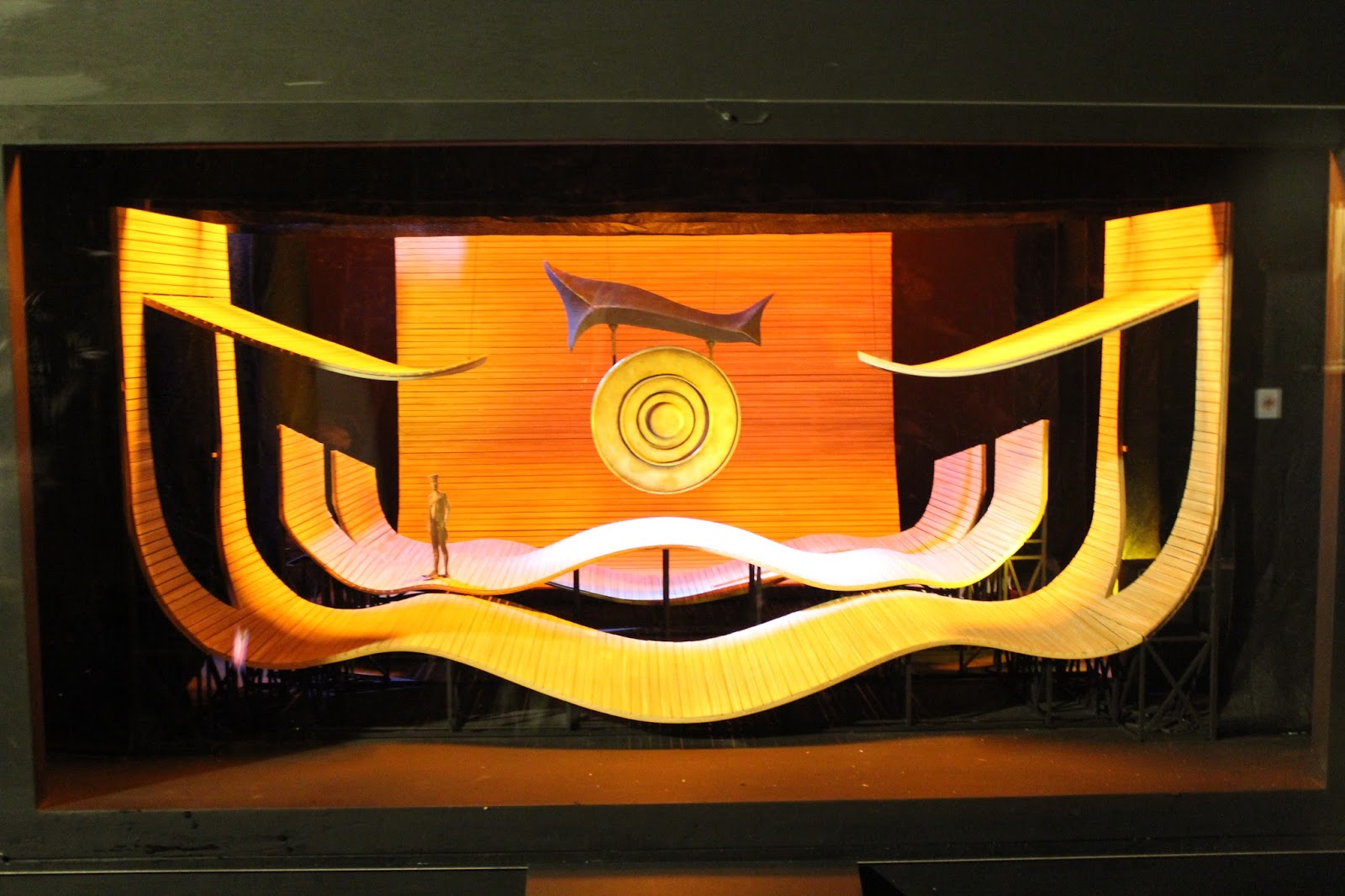
He was first to develop theater design as a profession and elevate it to an art form. Studied at Ateneo de Manila and at Northwestern University, Evanston, Illinois, USA, practiced, and handled courses in the art and craft of theater design.
[photo: stage set with a large ornate structure, for the play Sarswela]
Sarswela Directed by Felix Padilla Designed by: Salvador F. Bernal
https://theamazingamado.files.wordpress.com/2014/12/img_5553.jpg

The Elevated Eye (Badong: Salvador Bernal Designs the Stage)
Metaphoric wavelength Salvador Bernal’s fantastical designs for Lapu-Lapu
[photo: stage set with a golden curved structure and a fish motif, for Lapu-Lapu]
http://3.bp.blogspot.com/-IUmU5-ATchI/UimnK_W665I/AAAAAAAAgRA/-2PJVX0IfS8/s1600/095.JPG
Through the years, Philippine theatre groups have staged numerous plays in both English and Filipino, be they written by Western or local playwrights. Spanish culture and traditions largely influence performing arts in the Philippines, but the contemporary style is borrowed from the Americans. Classic shows such as West Side Story and The Sound of Music invariably made waves when they took the local stage.
What’s More
Comparison and Differentiation
Instructions: Complete the Venn Diagram below. Choose a famous Filipino play or opera with apparent Western theatre influence. Write the unique features of your chosen play on the left section of the Venn Diagram and on the right section, write the unique features of the Western play or opera which has influenced your chosen Filipino selection. Features you can mention include theatrical elements like characters, plot, costumes, set, props, etc. In the overlapping section, write the commonality between the two works.
[chart: Venn diagram of two overlapping circles; labels “Philippine Play” (left circle) and “Opera” (right circle); the circles are blank, and the overlapping section is for commonalities. Values are not labeled on the chart.]
What I Have Learned
Chart completion and Analysis
Instructions
- Watch the plays, Romeo and Juliet and Carmen (Opera)
- While watching, analyze each theatrical form using the elements of theatre.
- Write your answers on the chart below.
- For conclusion, answer the questions written below of the chart.
Elements of Theatre:
| Theater/Opera | Sound/Music | Gestures/Movement | Costumes and Make Up | Spectacle |
|---|---|---|---|---|
| Romeo and Juliet | ||||
| Carmen |
Summary
This module shows you Renaissance theatre and the life of the famous poet William Shakespeare in the Renaissance period and how his works influence Filipino plays.
In today’s generation, new media technology like the laptop, computer, mixer, sensitive microphones, fogs machine, loudspeakers and the like are incorporated in myriad performances with the goal of realism and spectacle. Backdrops for every scene can be displayed using computers and LED screens. Props are much easier to create and are more colorful. These innovations herald a greater payoff than ever before not only for the audience but also for the performers who utilize them every moment they are on stage.
Assessment
Assessment: (Post-Test)
Multiple Choice. Read the question carefully and write the correct answers on a piece of paper.
- Which part of the plot shows the end of the story where the conflicts or problems are solved?
- a. resolution b. ending c. falling action d. problem solved
- Which two important elements in a play up its emotional impact and visual appeal respectively?
- a. music & stage design c. music & spectacle
- b. plot & twist d. plot & props
- Who is an English poet and playwright widely known as the greatest writer in the English language and the world’s pre-eminent dramatist?
- a. Georges Bizet c. William Shakespeare
- b. Sophocles d. Ricardo Abad
- Which story element, commonly a person, animal, being, or thing, performs the actions and speaks the dialogue necessary for the progression of the plotline? Most stories have multiple of these interacting, with one of them as the antagonist, who comes into conflict with the protagonist.
- a. character b. main hero c. actor d. persona
- Which kind of play is characterized by its humorous or satirical tone?
- a. liturgy b. comedy c. tragedy d. drama
- Which of the following is the premier tool employed by actors?
- a. make-up b. voice c. costumes d. none of these
- Which one of these famous Filipino playwrights is known as the father of theater design in the Philippines?
- a. Severino Reyes c. Salvador Bernal
- b. Dr. Ricardo Abad d. none of the above
- Who is known as the Father of the Tagalog Zarzuela and for his masterpiece Walang Sugat?
- a. Dr. Ricardo Abad c. Severino Reyes
- b. Salvador Bernal d. Francisco Balagtas
- Who among the Filipino playwrights published a series of fairy tales titled Mga Kwento ni Lola Basyang?
- a. Salvador Bernal c. Dr. Ricardo Abad
- b. Severino Reyes d. Francisco Balagtas
- The staging of Romeo and Juliet was divided into three levels. What area is termed “heaven” for the balcony scenes?
- a. hell c. upper or canopied area
- b. main stage area d. none of the above
Answer Key
[transcriber’s note: the two answer boxes are printed upside down on the page; the answers are transcribed below in reading order]
Post – assessment
- a
- c
- c
- a
- b
- b
- c
- c
- b
- c
Pre – assessment
- d
- d
- a
- a
- b
- a
- a
- c
- c
- b
References
Music and Arts 9 Learners Module
http://en.wikipedia.org/wiki/File:KDujardinsCommedia.jpg Karel Dujardins,,ommedia dell’arte show, dated 1657 (Louvre) {{PD-art}} http://en.wikipedia.org/wiki/File:IJonesKnightmasque.jpg,Inigo Jones design for a Knight in a Court masque. Pen and wash {{PD-art}}
http://en.wikipedia.org/wiki/File:Shakespeare.jpg This image is in the public domain; PD-ART; This image is in the public domain due to its age; PD-OLD-100
http://en.wikipedia.org/wiki/File:Ballet_de_la_nuit_1653.jpg Henri Gissey (1621–1673), Released under the GNU Free Documentation License
Proscenium
Image taken from Wikipedia, PD http://en.wikipedia.org/wiki/File:Auditorium_Building14.jpg
http://en.wikipedia.org/wiki/File:Shakespeare.jpg PD Art-‘Chandos portrait‖byJohn Taylor National Portrait Gallery, 1610
http://www.keywordpictures.com/keyword/romeo%20and%20juliet%20costume%20designs http://s3.amazonaws.com/cmi-niche/gallery_photos/40859/images/slideshow_std_h_art1.jpg?1353969774
http://theaterfansmanila.com/7-types-of-theater-in-the-philippines/
For inquiries or feedback, please write or call:
Department of Education – Bureau of Learning Resources (DepEd-BLR)
Ground Floor, Bonifacio Bldg., DepEd Complex Meralco Avenue, Pasig City, Philippines 1600
Telefax: (632) 8634-1072; 8634-1054; 8631-4985
Email Address: blr.lrqad@deped.gov.ph * blr.lrpd@deped.gov.ph
Leave a Reply